A Calm Plan for Helping Your Dog Adjust to Being Home Alone
A schedule change can unsettle a dog. Learn how to observe alone-time behavior, start with brief absences, and recognize when extra help is needed.
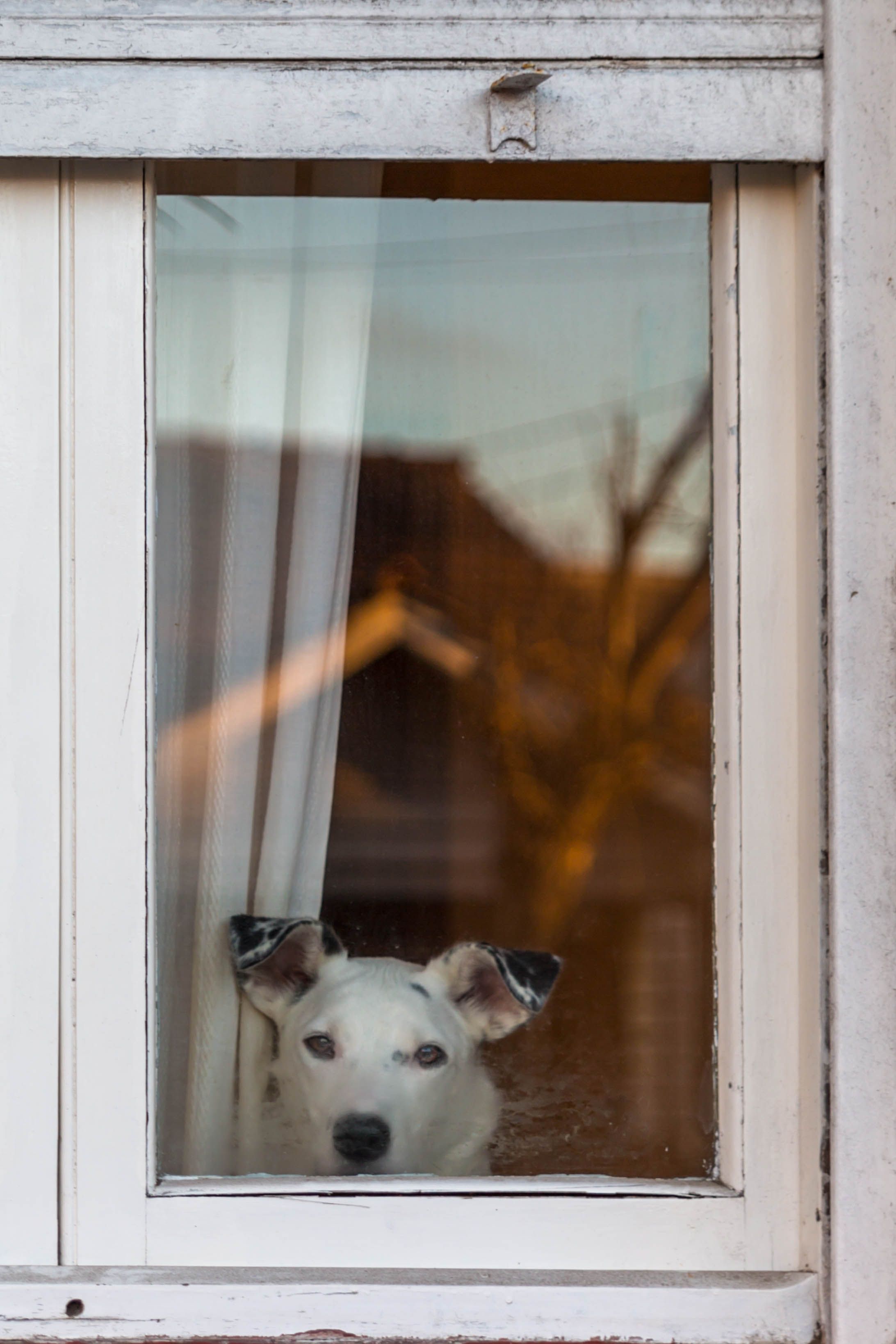
Photo by Leonardo Delsabio under the Pexels License.
A new work schedule can change a dog's daily pattern quickly. Some dogs cope with the change, while others show separation-related distress when left alone. The first step is not to guess what happens after you close the door. Observe it.
Look beyond the first few minutes
Separation-related distress can appear as barking, destruction, escape attempts, or elimination in the home. Some signs may be less obvious, so a dog who seems quiet when you leave is not necessarily comfortable throughout the absence.
A camera can help you see what happens after you go. If you do not have one, keep a behavior log based on what you can observe before and after an absence. Record:
- The time you left and returned
- How long the dog appeared comfortable
- Any barking, destruction, escape attempts, or elimination
- Whether the behavior occurred soon after departure or later
- How the dog responded when you returned
Keep the record factual and consistent. Its purpose is to identify a pattern and help you choose a starting point, not to judge the dog.
Find the starting point
Once you have an idea of your dog's response, plan absences shorter than the point at which distress begins. If the dog starts barking or attempting to escape after a certain period, do not use that period as the first training goal. Begin with a much shorter absence that remains below the dog's distress threshold.
For example, if your observations show distress after several minutes, start with an absence brief enough that the dog stays comfortable. The exact length will differ between dogs, and it may be very short. The important feature is not a target number of minutes. It is that the dog remains below the point where distress appears.
Practice these brief departures gradually. When the dog can manage the current absence without signs of distress, increase the length carefully rather than making a large jump. If distress appears, reduce the duration again. Progress may not be a straight line, especially after a major change in routine.
Keep the response calm
Gradual departures and counterconditioning are recommended approaches for separation-related distress. In practical terms, this means pairing the process of being alone with a gradual training plan rather than forcing a long absence and hoping the dog adapts.
Avoid punishment for barking, destruction, elimination, or escape attempts. Punishment can worsen anxiety and does not address the distress behind the behavior. Instead, use your observations to adjust the next practice absence so it stays below the dog's threshold.
A schedule change may also mean that unavoidable absences are longer than the dog can currently manage. If possible, use your camera or log to distinguish between training absences and necessary time away. Do not treat a long, unavoidable absence as a training repetition if it repeatedly leads to distress. The sources do not provide a general timetable for how long a dog should be left alone, so there is no single safe duration to apply to every dog.
Know when to involve a professional
Contact a veterinarian or a qualified clinical behaviorist when basic steps do not help, when the behavior is severe, or when you are unsure what you are seeing. Escape attempts and destruction can be signs of significant distress, and hidden signs may be missed without observation.
Bring your behavior log and relevant camera observations to that conversation. They can help describe the pattern more clearly than a general report that the dog is anxious. A professional can also help you decide how to continue gradual departures while reducing the risk of repeatedly pushing the dog past its coping limit.
A calm adjustment plan starts with information: observe what happens, begin below the distress threshold, change the duration gradually, and avoid punishment. If the pattern does not improve, seek veterinary or qualified behavior support rather than extending absences and waiting for the problem to resolve on its own.
Every dog is different. This is general information, not a diagnosis or treatment plan. Ask your veterinarian about individual health, diet, and supplement decisions.