Dog Dementia or Normal Aging? What to Notice
Slowing down is not the whole story. Learn which gradual behavior changes deserve a veterinary conversation and how to document them clearly.
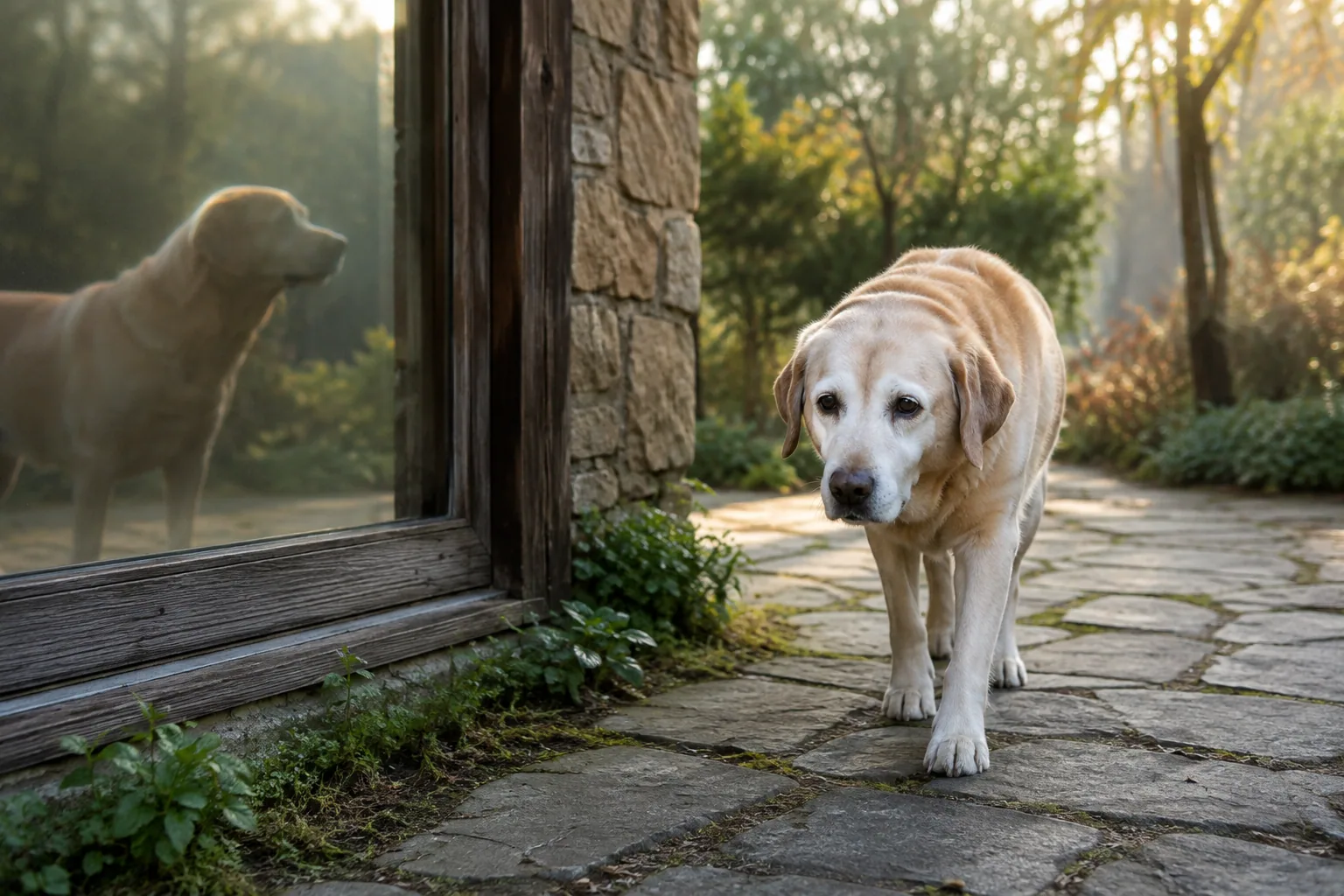
The difference between dog dementia and normal aging cannot be decided from one behavior or an online quiz. Older dogs may move, hear, see, sleep, or socialize differently for many reasons. Repeated disorientation, disrupted sleep, house-training loss, altered interaction, anxiety, or repetitive activity should be documented and discussed with a veterinarian rather than dismissed as “just old age.”
Aging is a life stage, not a diagnosis
Gray hair and a slower pace are visible signs of age. They do not explain why a dog suddenly avoids stairs, stops greeting family, wakes repeatedly, or has accidents. A change in function is information. The task is to find out whether it reflects the environment, pain, sensory loss, another health problem, cognitive decline, or more than one issue.
Cornell and AVMA both describe cognitive changes across several areas of life. The pattern matters more than any single moment. A dog who briefly hesitates in dim light may need better lighting or a vision assessment; a dog repeatedly trapped in familiar corners may show a different pattern.
Look for change from the dog’s own baseline
Comparing one senior dog with another can mislead. Instead, think about what was normal for this dog six or twelve months ago. Has the frequency, intensity, or context changed?
Useful observations include whether your dog recognizes familiar routes, settles at usual times, signals to go outside, responds to household members, and begins or finishes ordinary activities. Note changes in appetite, drinking, elimination, movement, hearing, and vision alongside behavior.
Separate gradual patterns from sudden events
Cognitive dysfunction generally develops gradually. A sudden severe change deserves faster assessment. Loss of balance, collapse, seizures, marked weakness, inability to stand, or a dramatic change in awareness should not be placed in a wait-and-see dementia log.
Even gradual changes deserve attention. Earlier discussion gives the veterinary team more opportunity to evaluate other causes and build a support plan while the dog still has stable routines.
Avoid three common assumptions
First, do not assume every nighttime wake-up is cognitive decline. Discomfort, needing to eliminate, noise, temperature, or medication timing can disturb sleep. Second, do not assume an accident is stubbornness. A dog may have mobility, urinary, digestive, sensory, or cognitive difficulty. Third, do not assume reduced play means the dog no longer wants connection. The activity may have become physically or mentally harder.
Punishment adds fear and provides no diagnostic information. Respond with safety, cleanup, and a useful note.
Prepare a clear appointment summary
Write a one-page timeline with the first noticed change, current frequency, and two or three concrete examples. Bring short videos if safe, plus a list of food, treats, medicines, and supplements. Mention environmental changes such as moving furniture, a new pet, altered work hours, or construction noise.
Ask the veterinarian which examinations or tests can help rule out other causes. Cornell notes that pain, arthritis, seizures, systemic illness, and vision or hearing loss can resemble aspects of cognitive decline.
Support the dog while you investigate
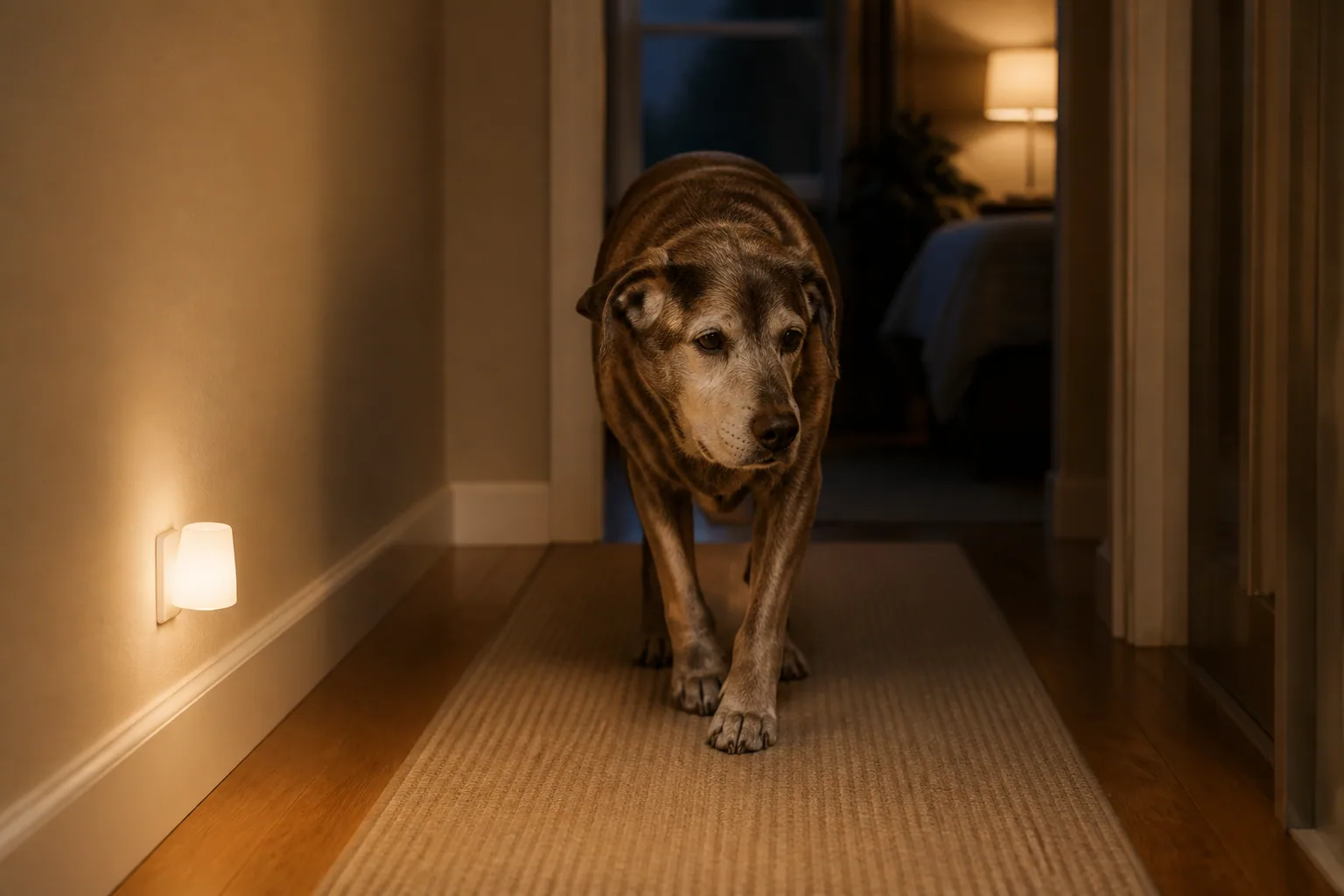
Keep routes through the home clear and predictable. Improve lighting in hallways and near doors. Add secure footing on slippery surfaces and block unsafe areas. Offer calm, familiar interaction and shorter activities that the dog can complete successfully.
Maintain a predictable schedule for meals, rest, outdoor breaks, and medication. Do not rearrange the whole home at once. Small changes are easier to evaluate and less likely to create additional confusion.
Revisit the question over time
An initial assessment may not close the case. Continue recording sleep, orientation, interaction, activity, anxiety, and house training. Agree on a recheck interval and on signs that should prompt an earlier call.
The most useful question is not “Is this normal?” in isolation. Ask, “What changed for my dog, what else could explain it, and what information will help us decide?” That approach respects aging without using age to overlook a treatable or manageable problem.
Further reading & sources
Cornell University: Cognitive dysfunction syndrome ↗AVMA: Senior pets need more attention ↗AKC Canine Health Foundation: Aging Dog Dementia ↗Edited by Waggle Hollow
Every dog is different. This is general information, not a diagnosis or treatment plan. Ask your veterinarian about individual health, diet, and supplement decisions.