Dogs and Body Language: Safer Everyday Greetings
Learn how dogs use posture, movement, distance, and facial signals, then apply a consent-based greeting routine around familiar and unfamiliar dogs.
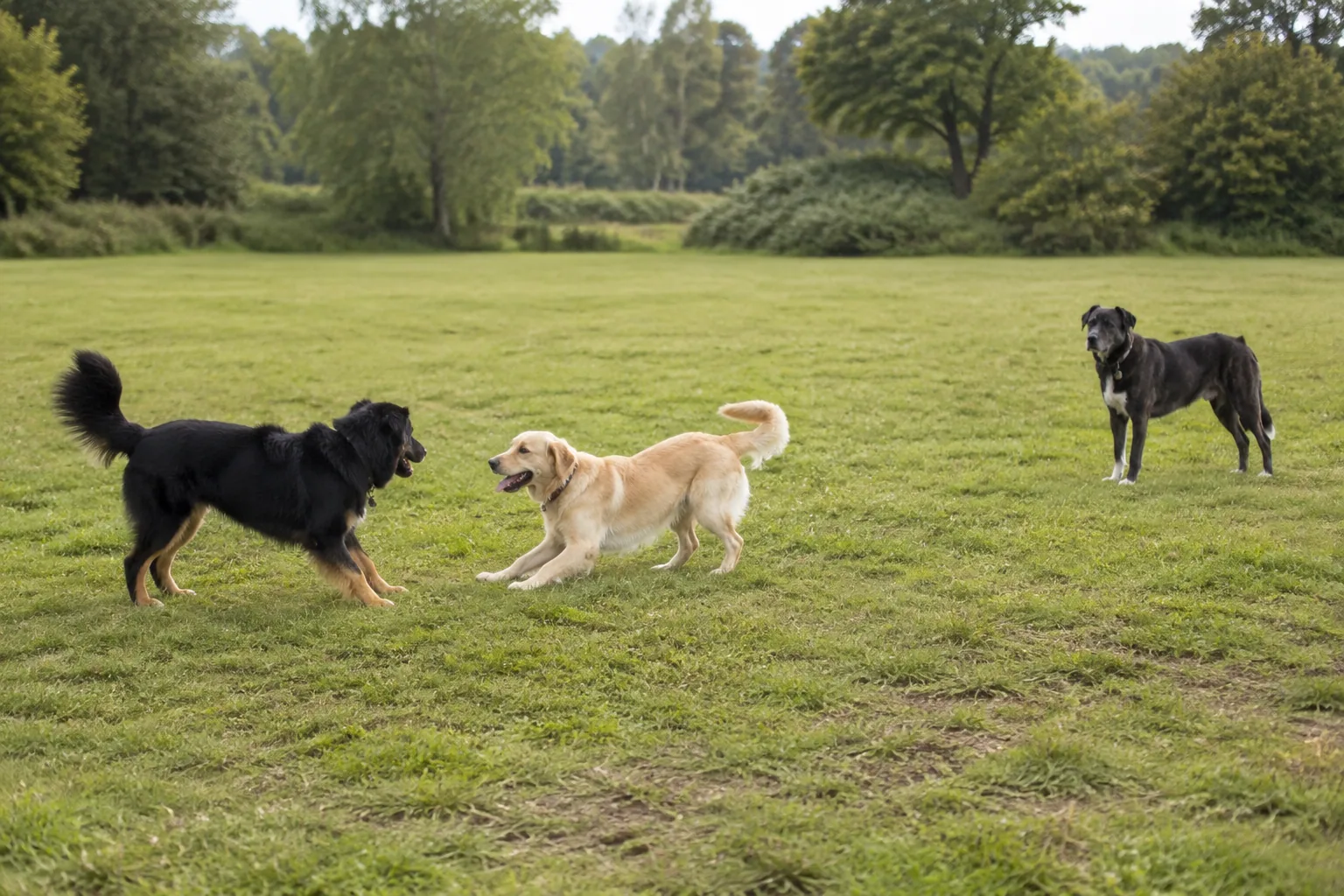
Dogs communicate constantly through movement, posture, facial tension, sound, and the distance they create. Reading one signal in isolation can be misleading, so observe the whole dog and the situation. A safer greeting gives the dog room to approach, pause, or leave instead of assuming contact is welcome.
Begin with the whole picture
A relaxed dog may have loose muscles, natural movement, a softly open mouth, and the ability to turn away or explore. A worried dog may lower their body, lean away, close the mouth, lick the lips, yawn, freeze, show the whites of the eyes, tuck the tail, or seek distance.
These signs are context dependent. A wagging tail shows movement and arousal; it does not always mean friendliness. Raised fur also signals arousal rather than a guaranteed intention. Look at speed, stiffness, weight distribution, eyes, mouth, ears, tail, and whether the dog can disengage.
Treat distance as communication
Moving away, hiding, turning the head, or standing behind a caregiver are meaningful choices. Do not follow or corner a dog who creates distance. Give them a clear exit and reduce pressure.
Growling is also information. Punishing a warning can suppress the signal without resolving the discomfort. Stop the interaction, create space, and identify what led to it. Seek qualified help when warnings repeat or safety is uncertain.
Use a consent-based greeting
For an unfamiliar dog, ask the caregiver first. Stand at an angle rather than leaning overhead. Keep hands near your own body and let the dog decide whether to approach. If the dog comes close with loose movement, touch briefly on the shoulder or chest, then pause. Continue only if the dog clearly seeks more contact.
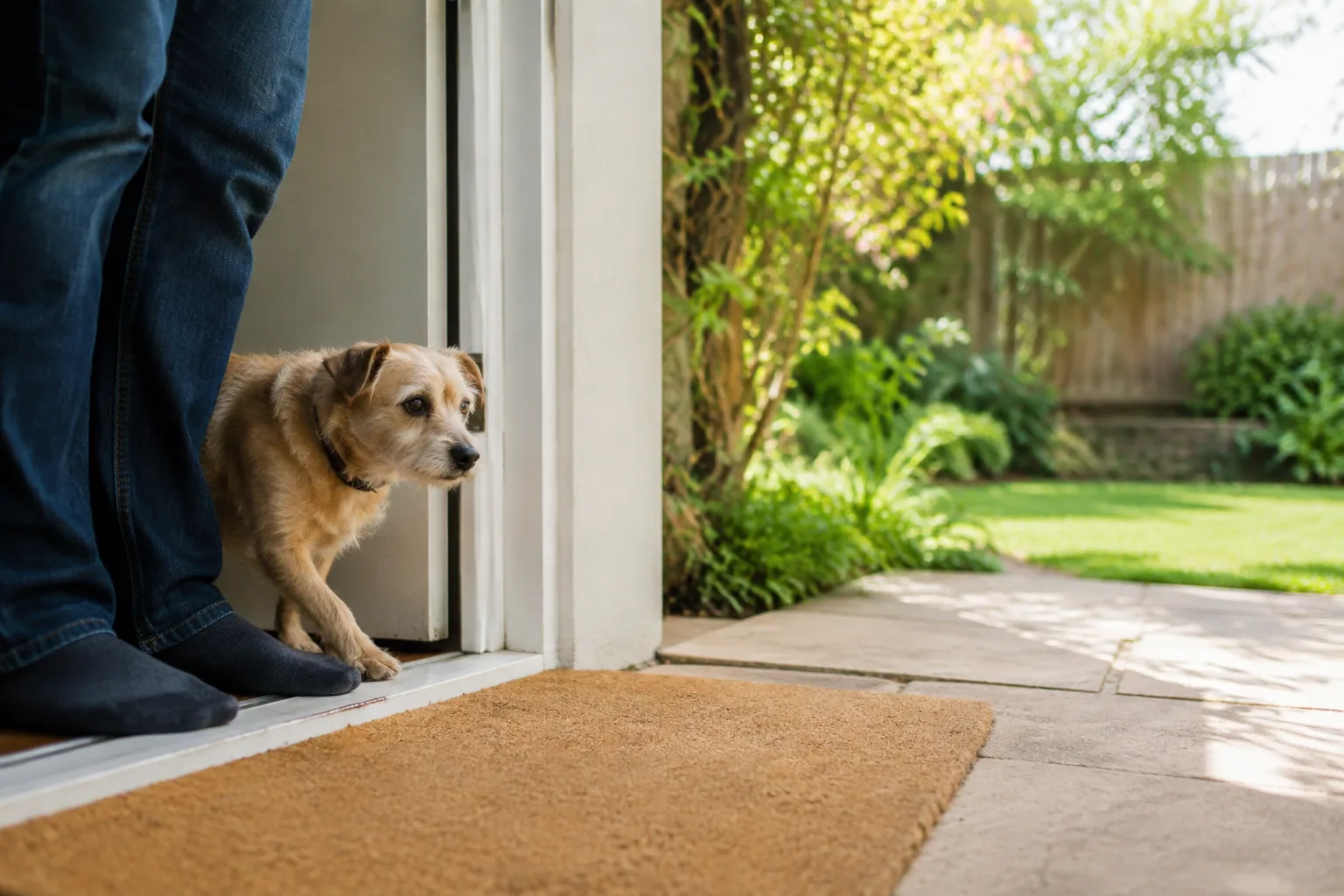
Do not reach into a car, crate, doorway, or behind a fence. Avoid hugging, face-to-face contact, grabbing collars, or disturbing a dog who is eating, sleeping, caring for puppies, injured, or trying to leave.
Children need active adult supervision. Teach them to stop when a dog turns away and to call an adult rather than approaching loose or unknown dogs.
Manage dog-to-dog meetings
On leash, allow space and avoid tight, head-on approaches. Not every dog needs to greet. If both caregivers agree, parallel walking at a comfortable distance can be easier than immediate nose-to-nose contact.
Interrupt before either dog becomes trapped or overwhelmed. Loose curves, pauses, and role changes are more reassuring than stiffness, prolonged staring, repeated pinning, or relentless pursuit.
Respond to a sudden change
A normally social dog who becomes irritable, withdrawn, or sensitive to touch may be in pain or unwell. Record when the change occurs and contact the veterinary team. Behavior is part of health information.
For a bite, separate safely, attend to the injured person or animal, exchange contact and vaccination information, and follow local reporting and medical guidance. Do not place hands between fighting dogs.
Practice observation without testing the dog
Watch during ordinary routines: visitors arriving, leash attachment, meals, play, grooming, and rest. Note what happens immediately before tension and what helps the dog recover. Use that record to prevent difficult situations and reward calm choices.
Understanding dogs is less about memorizing a chart and more about noticing change, respecting space, and adjusting before discomfort becomes conflict.
Edited by Waggle Hollow
Every dog is different. This is general information, not a diagnosis or treatment plan. Ask your veterinarian about individual health, diet, and supplement decisions.