Exercise for Senior Dog Brain Health
Build a steady, observable movement routine for an older dog without turning brain-health claims into unsafe exercise targets.
Exercise for senior dog brain health is best treated as comfortable, regular movement within an individualized care plan. Veterinary guidance includes activity and enrichment among ways to support older dogs, but there is no universal distance or intensity target. Let function, recovery, weather, and medical advice set the pace.
Establish today’s baseline
For several ordinary days, note how long your dog walks willingly, where they slow down, and how they behave later. Record stiffness after rest, slipping, reluctance on stairs, coughing, heavy breathing, lagging, or difficulty settling after activity.
Compare the dog with their own recent baseline rather than a younger dog or a fitness-app goal.
Prefer consistency over occasional intensity
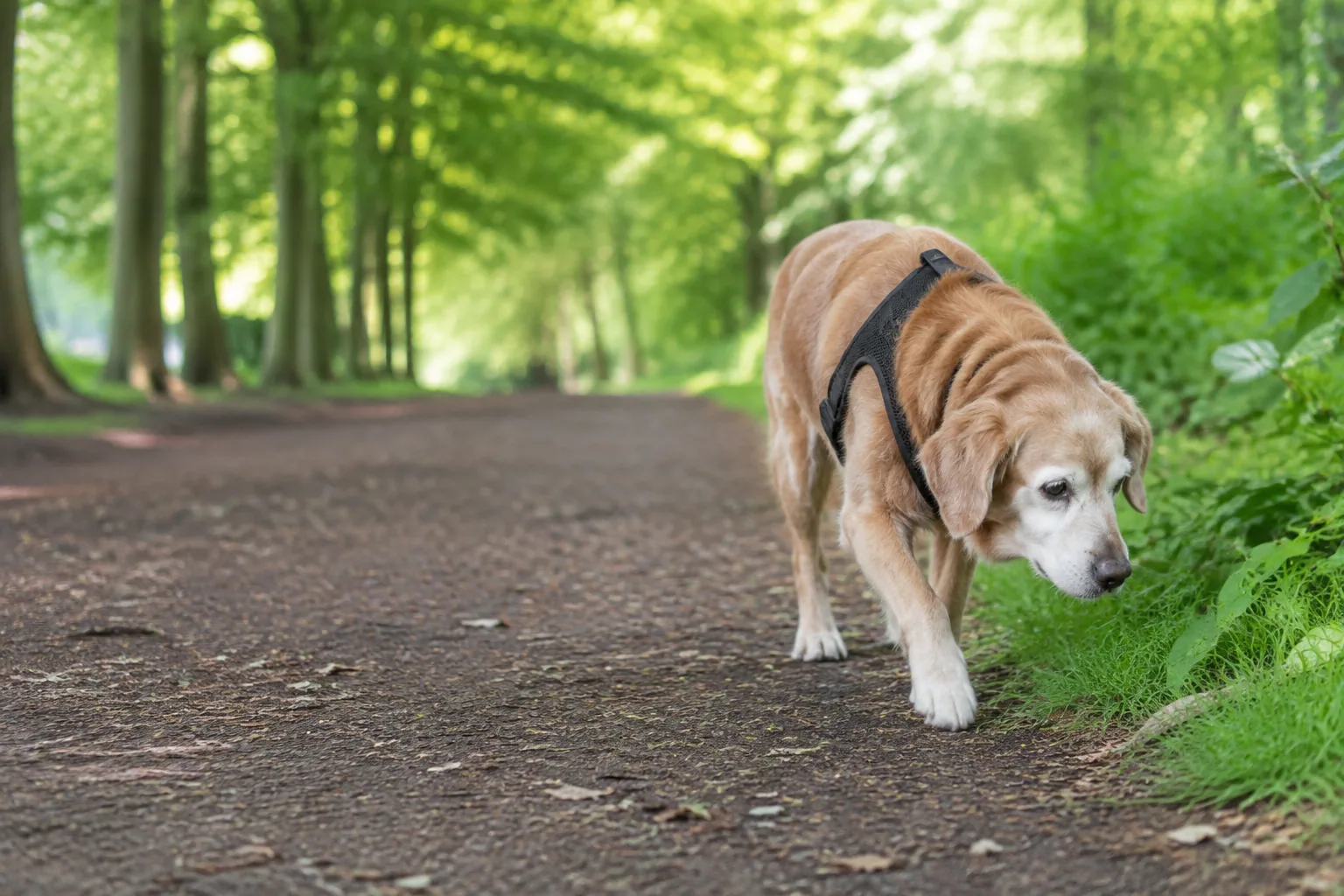
Short, predictable outings may be easier to tolerate than a long weekend walk. Choose level, familiar routes with room to turn and rest. Avoid hot surfaces, extreme temperatures, and crowded situations that make navigation harder.
Allow sniffing when safe. A walk can provide sensory engagement without covering a large distance.
Make footing and equipment part of the plan
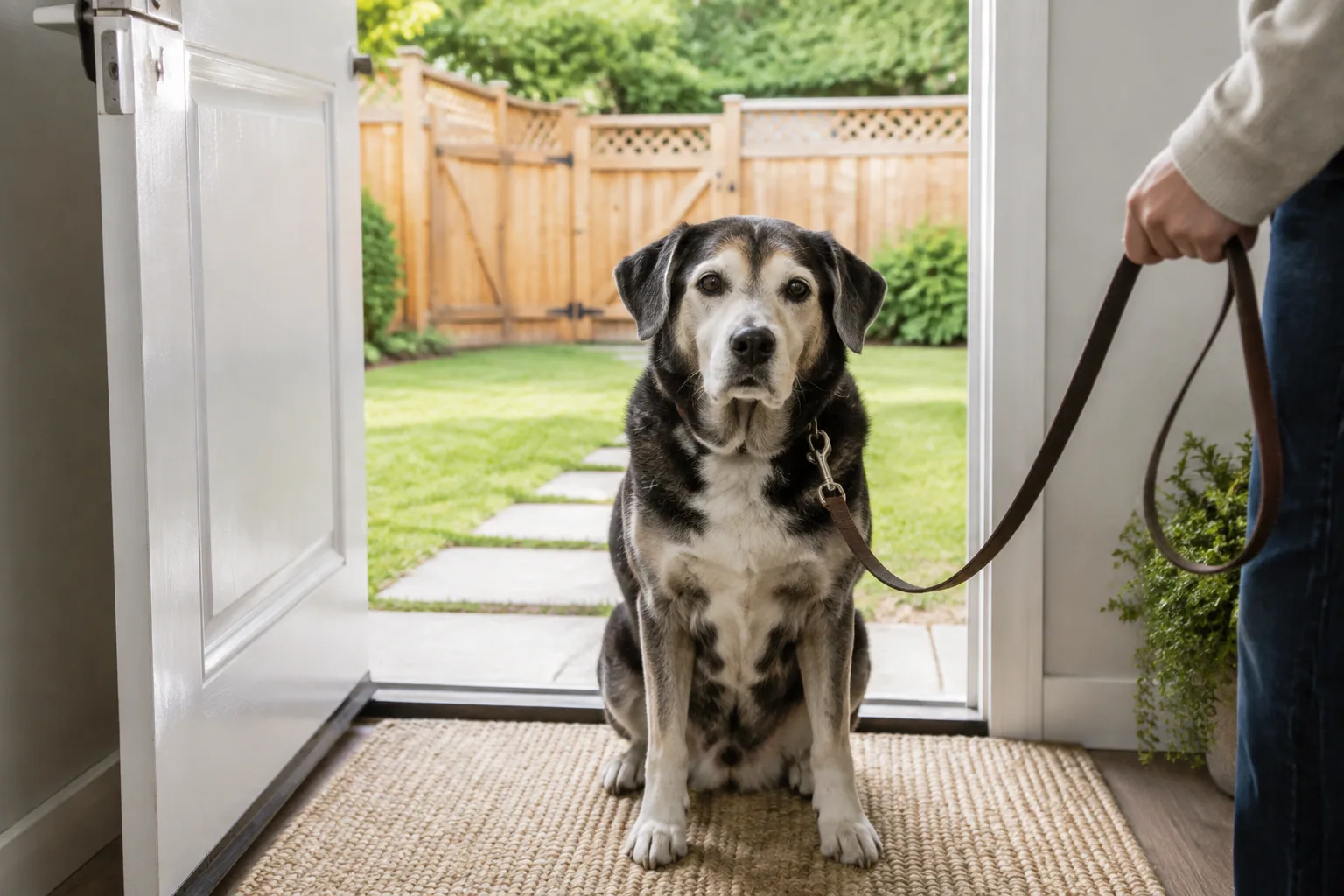
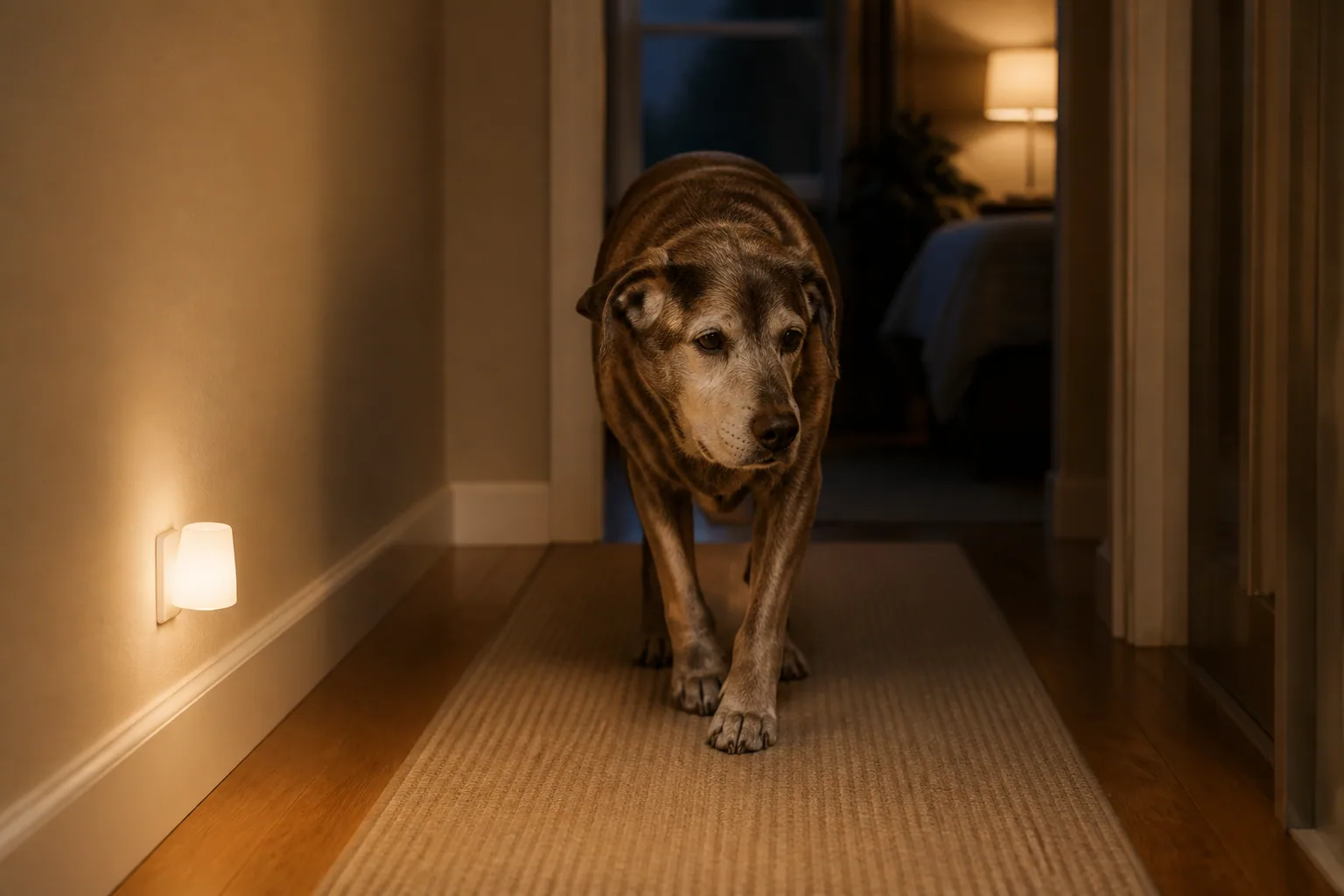
Use walking equipment the dog already wears comfortably and that gives the caregiver safe control. Check nails, paw condition, and the route surface. At home, create nonslip paths between the resting area and exit.
Do not introduce a support harness without learning how to fit and use it. The wrong placement can create pressure or alter movement.
Watch the whole recovery period
An outing is not successful only because the dog completed it. Note breathing, gait, appetite, sleep, and willingness to move later that day and the next morning. A delayed increase in stiffness or fatigue may mean the activity was too much.
Reduce duration or difficulty after a poor recovery and discuss repeated changes with the veterinary team.
Pair movement with simple engagement
Use familiar routes with small choices: pause at two safe sniffing spots or let the dog choose between two level paths. Avoid complicated obstacle courses, jumping, or abrupt turns. The aim is comfortable participation, not performance.
On indoor days, a few calm walks through a clear room or a supervised food search on a nonslip surface may be enough.
Know when to stop and call
Stop activity for collapse, marked weakness, breathing difficulty, sudden loss of balance, severe pain, or inability to continue. Seek prompt veterinary advice. Gradual reluctance, stiffness, behavior change, or reduced endurance also deserves assessment rather than an assumption that age explains everything.
AVMA notes that changes in activity can signal underlying problems. Cornell explains that other conditions can overlap with cognitive signs. That is why a movement plan should begin with observation and, when needed, examination.
Ask for boundaries you can use
Bring your activity log and videos of ordinary walking if safe. Ask:
- Which surfaces and movements should we avoid?
- What duration is a reasonable starting point?
- Which recovery signs mean we should reduce activity?
- How should weather change the plan?
- When should we schedule a recheck?
Review the routine as the dog changes. A shorter walk can still offer scent, choice, companionship, and a meaningful part of the day.
Further reading & sources
Cornell University: Cognitive dysfunction syndrome ↗AAHA: 2023 Senior Care Guidelines for Dogs and Cats ↗AVMA: Senior pets need more attention ↗Edited by Waggle Hollow
Every dog is different. This is general information, not a diagnosis or treatment plan. Ask your veterinarian about individual health, diet, and supplement decisions.