Home Safety for Dogs With Dementia
Simple, reversible home changes can help a dog with cognitive difficulties move, rest, eat, and find familiar routes more safely.
Home safety for dogs with dementia starts with predictable routes, secure footing, good lighting, and barriers around real hazards. Make small, reversible changes and watch how the dog responds. A home setup can support daily function, but it does not replace veterinary evaluation or an individualized care plan.
Map the dog’s everyday routes
Walk through the home at the dog’s eye level. Trace the route between bed, water, food, the usual exit, and favorite resting places. Look for slick floors, sharp corners, narrow gaps, cords, unstable rugs, and furniture that creates a dead end.
Record where the dog hesitates or becomes stuck. Cornell describes disorientation that can include difficulty navigating familiar places. Concrete observations help you decide where a small change may matter.
Protect stairs and trapping points
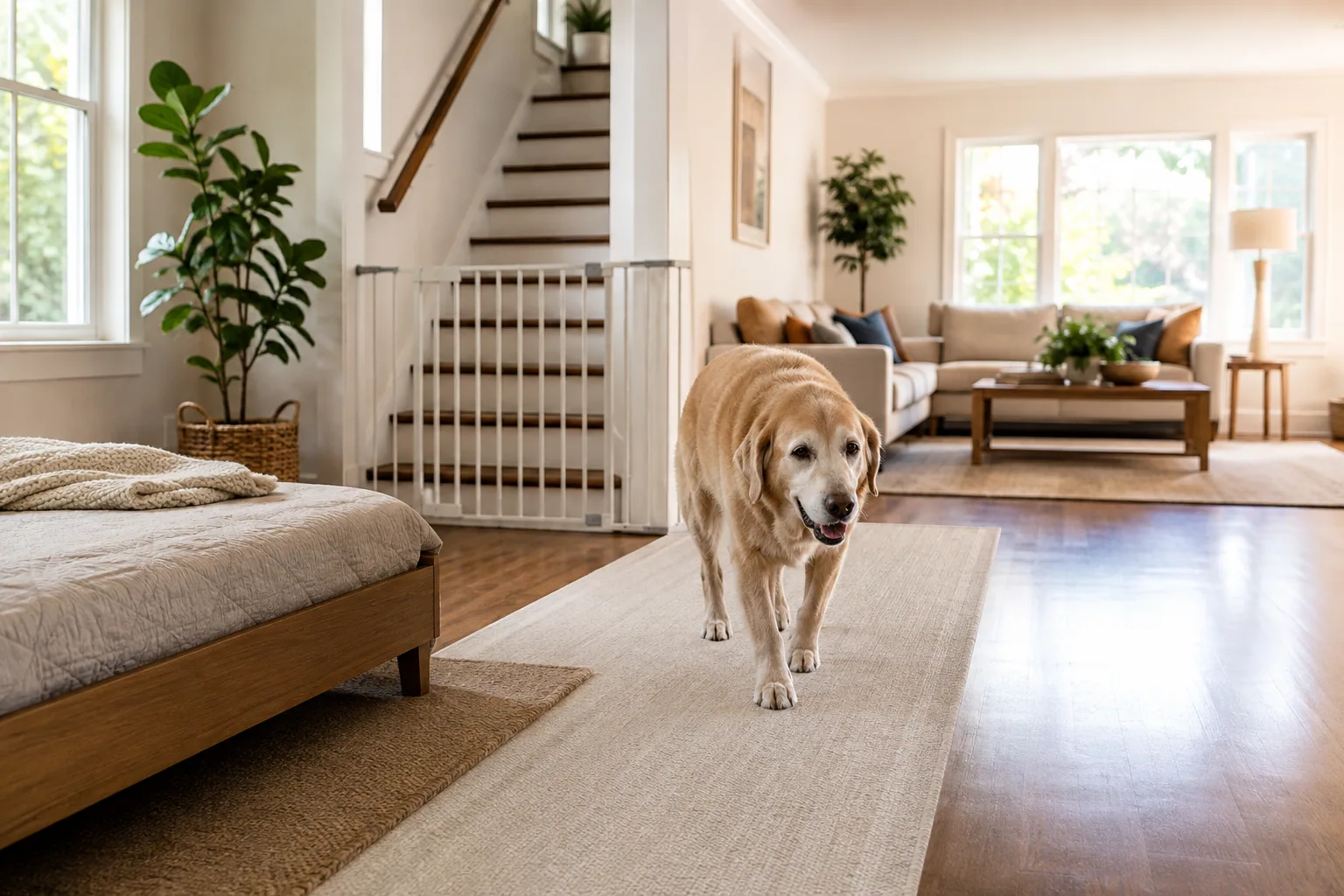
Use secure barriers around stairs, balconies, pools, fireplaces, and spaces behind furniture. A barrier should not wobble, create a climbing hazard, or leave a gap where the dog can become wedged. Check it from both directions.
Block complicated routes rather than expecting the dog to relearn them. Keep essential resources on one accessible level when possible.
Improve traction and visibility
Create continuous nonslip paths with mats or runners that lie flat and do not slide. High contrast between the path and surrounding floor may help some dogs, but observe the individual response; a strong pattern can also be confusing.
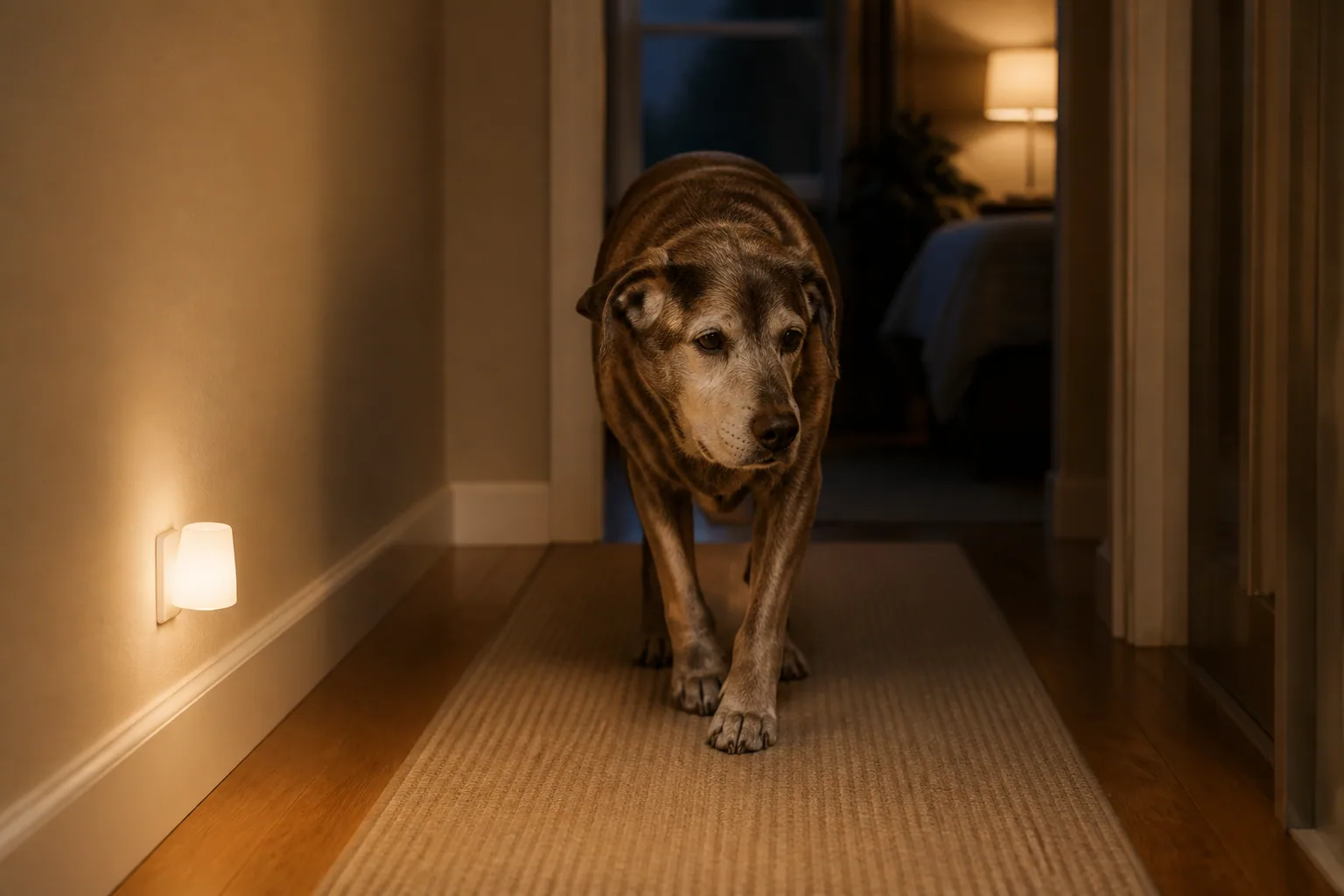
Use soft, even lighting at night near the bed, water, and exit. Reduce glare and deep shadows. Keep furniture placement stable so familiar landmarks remain useful.
Make food, water, and rest easy to find
Place bowls in a consistent, quiet location with secure footing. Keep fresh water accessible without forcing the dog to cross stairs or a busy room. If bending or standing is difficult, describe the problem to the veterinary team before changing bowl height or posture.
Provide a comfortable bed the dog can enter and leave. Check for overheating, damaged fabric, and pressure points. Offer a nearby alternative rather than forcing one sleeping position.
Support safe outdoor access
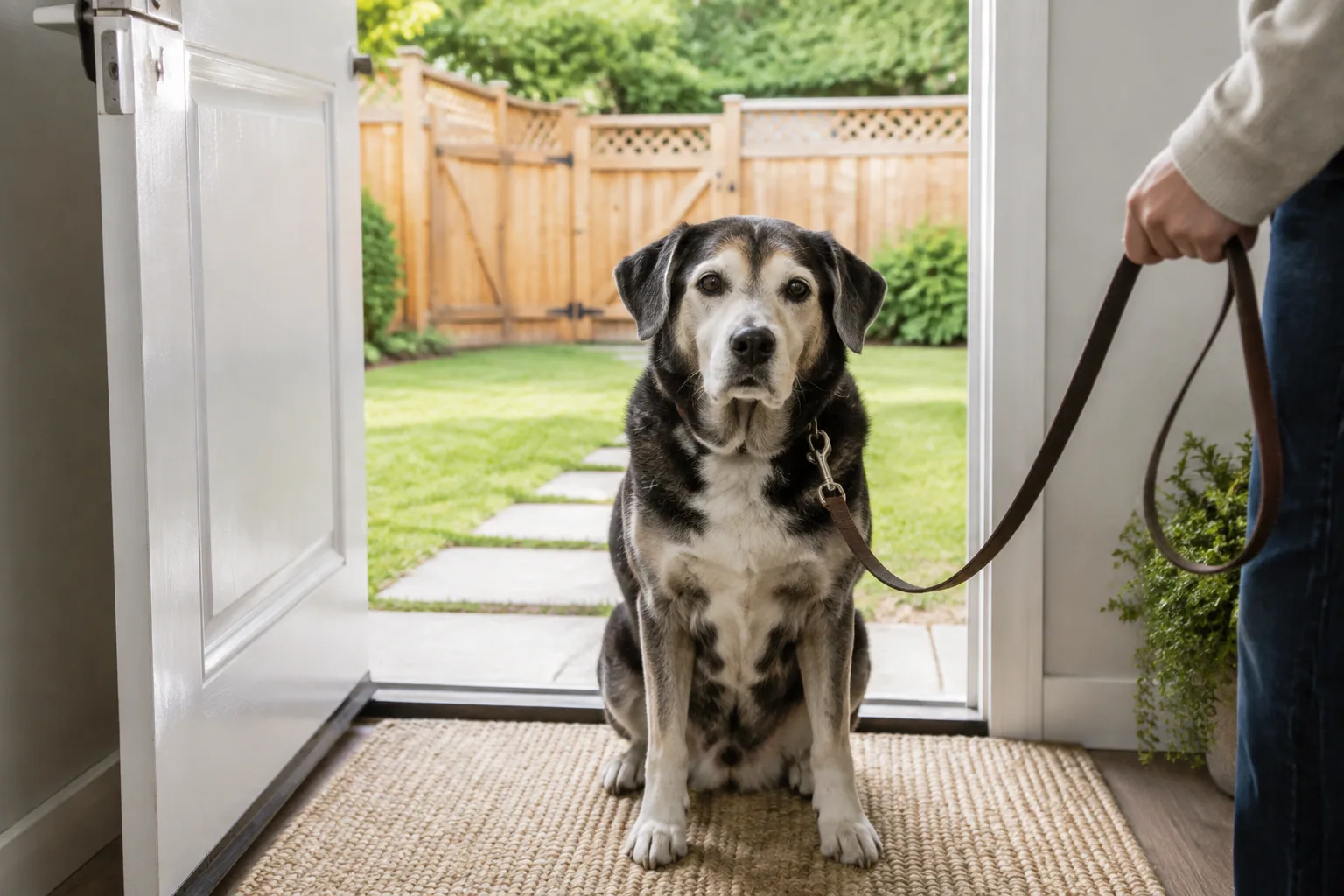
Use a well-lit, fenced or leashed route appropriate for the property and local rules. Stay close enough to help if the dog becomes disoriented. Remove garden chemicals, standing water, and small items the dog might investigate or swallow.
Keep identification current. A dog who wanders or becomes confused can be at greater risk if a gate is left open.
Change one thing at a time
A complete home makeover can remove the very cues the dog uses. Start with the clearest hazard, observe for several days, and keep notes. If a new mat causes avoidance or a barrier creates distress, revise the setup.
Do not use confinement as the default answer to wandering. The space must be comfortable, appropriately sized, and familiar, and the dog should be able to rest without panic. Ask for behavior or veterinary guidance when confinement is difficult.
Review the setup as needs change
Check weekly for new hesitation, slipping, accidents, nighttime routes, and difficulty locating resources. Include caregiver strain: a plan that requires constant lifting or overnight supervision may need more support.
Seek prompt help for sudden disorientation, loss of balance, collapse, seizures, severe distress, or inability to stand. Gradual change also deserves a scheduled veterinary discussion because other conditions can resemble cognitive decline.
The aim is not to make the home perfect. It is to remove predictable hazards while preserving choice, familiar company, and ordinary pleasures.
Further reading & sources
Cornell University: Senior dog dementia ↗AAHA: 2023 Senior Care Guidelines for Dogs and Cats ↗AVMA: Senior pets need more attention ↗Edited by Waggle Hollow
Every dog is different. This is general information, not a diagnosis or treatment plan. Ask your veterinarian about individual health, diet, and supplement decisions.