Dog Food: How to Choose, Read, Store, and Compare
A practical dog-food guide to nutritional fit, complete-and-balanced statements, company questions, label claims, safe storage, and diet transitions.
Dog food should be chosen for the individual dog, then evaluated through the full label, company information, feeding response, and veterinary assessment. “Best” is not a universal brand or ingredient list. Age, health, body and muscle condition, activity, eating history, and the food's intended use all matter.
Begin with the dog
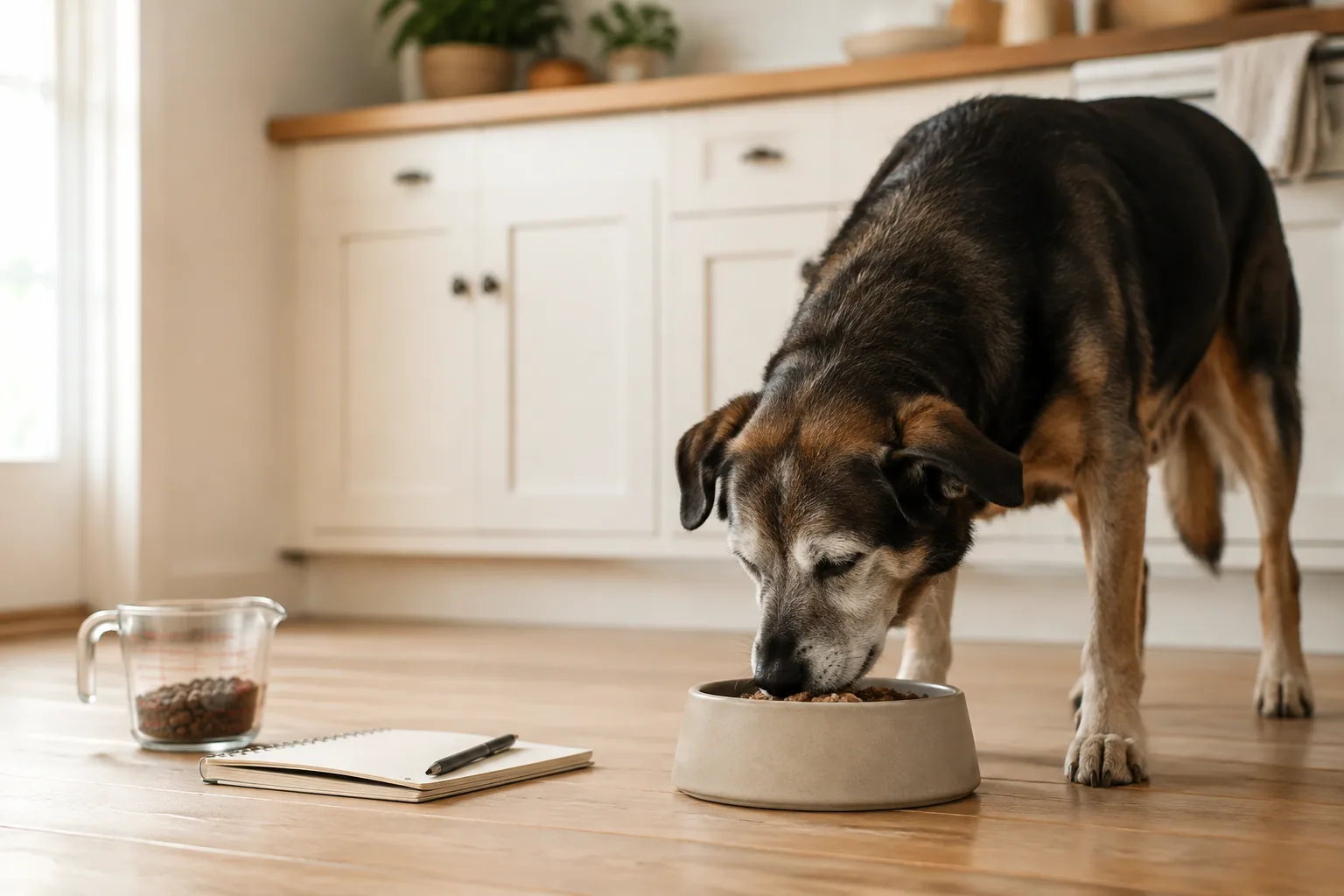
Record the current product, flavor, form, measured amount, treats, chews, table food, supplements, and flavored medications. Note appetite, weight trend, stool, skin, coat, energy, and any diagnosed conditions. Bring this diet history to veterinary visits.
WSAVA nutrition tools emphasize nutritional assessment rather than shopping by a single marketing claim. Puppies, pregnant or nursing dogs, adults, seniors, and dogs with medical conditions may have different needs.
Find the nutritional-adequacy statement
Look for wording that explains whether the food is complete and balanced for a stated life stage or intended only for intermittent or supplemental feeding. The exact statement matters more than words such as premium, natural, holistic, or human-grade on the front of the package.
Check the species and life stage. A product intended as a topper or treat should not quietly replace a complete daily diet unless a qualified veterinary professional has formulated the whole plan.
Read the guaranteed analysis in context
The guaranteed analysis lists minimums or maximums for certain nutrients, but values on foods with different moisture levels cannot always be compared directly. Wet and dry food may look very different as-fed even when their nutrient profiles are closer on a dry-matter or calorie basis.
Ask the manufacturer or veterinary team for help with meaningful comparisons. Do not rank foods solely by the first ingredient or the length of the ingredient list. Ingredients are listed by weight before processing, which does not by itself reveal the quality or suitability of the finished diet.
Ask the company useful questions
Find out who formulates the food, their qualifications, how the finished product is tested, how nutrient content is verified, where it is manufactured, what quality-control steps are used, and how customers can contact the company about a specific lot.
For health-related claims, request evidence for the finished formulation rather than assuming research on one ingredient applies to every product containing it. FDA explains that disease-treatment or structure-function claims can affect how an animal product is regulated.
Store food with traceability
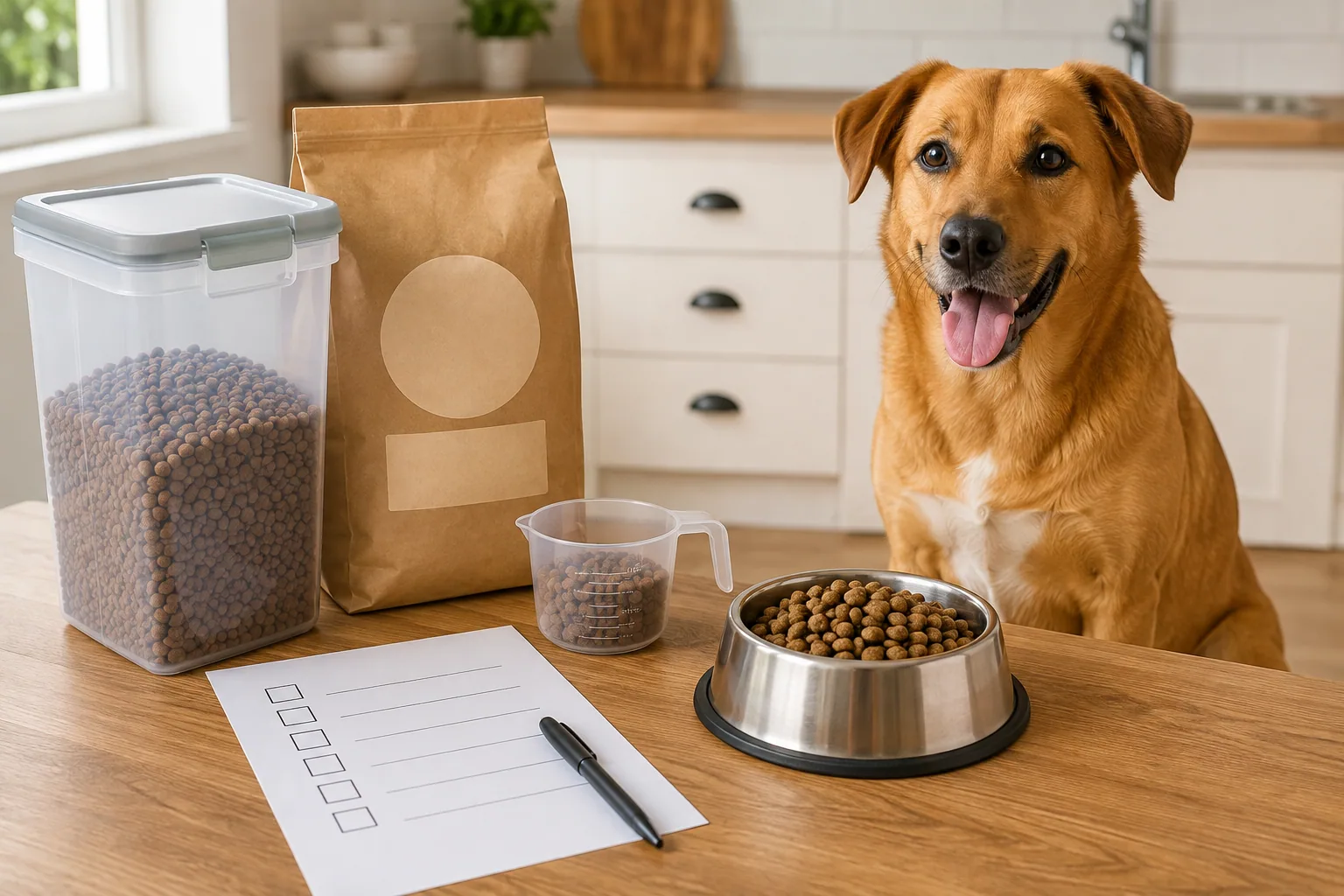
FDA advises retaining the original package because it carries the product name, manufacturer, UPC, lot code, and best-by information needed for recalls or complaints. Place the entire dry-food bag inside a clean sealed container when practical instead of pouring food loose and discarding the bag.
Keep unopened food cool and dry, refrigerate or discard unused wet food promptly according to instructions, wash bowls and utensils, and prevent pets from accessing the supply. Photograph the lot code when opening a new package.
Transition and monitor deliberately
Ask how quickly to change foods for your dog. Introduce one meaningful diet change at a time and measure portions. Track appetite, stool, vomiting, itching, weight, energy, and any new behavior. Contact the veterinary team for persistent problems or acute illness.
If a product smells wrong, is swollen or leaking, contains foreign material, or appears linked to illness, stop using it, retain the package, and contact the manufacturer, FDA, and veterinarian as appropriate.
Compare value beyond bag price
Calculate cost per day using the amount your dog actually needs, not price per pound alone. Include waste, professional guidance, delivery reliability, storage, and whether the dog maintains an appropriate condition.
A sound dog-food choice is nutritionally appropriate, made with transparent quality controls, affordable enough to feed consistently, stored safely, and reviewed when the dog's needs change.
Useful tools for this guide
Etekcity Food Kitchen Scale with Bowl
A portion-measuring candidate with a removable bowl and gram display. Use the amount recommended for the individual dog, and confirm the current listing specifications before approval.
Selected by Waggle Hollow
Check price on AmazonPaid link. We may earn a commission from qualifying purchases.
Amazon Basics 69 QT Pet Food Storage Container
A wheeled storage-container candidate for keeping a dry-food bag protected and traceable. Buyers should confirm that their unopened or opened original bag fits inside and clean the container between bags.
Selected by Waggle Hollow
Check price on AmazonPaid link. We may earn a commission from qualifying purchases.
PETLIBRO Automatic Dog Feeder with Camera
A higher-cost scheduled-feeding candidate for small dogs. An editor should verify portion range, kibble compatibility, cleaning instructions, connectivity, and failure behavior before recommending it.
Selected by Waggle Hollow
Check price on AmazonPaid link. We may earn a commission from qualifying purchases.
Further reading & sources
WSAVA: Global Nutrition Guidelines and Toolkit ↗FDA: Animal food labeling and pet food claims ↗FDA: Proper storage of pet food and treats ↗Edited by Waggle Hollow
Every dog is different. This is general information, not a diagnosis or treatment plan. Ask your veterinarian about individual health, diet, and supplement decisions.