Dog Food Storage: A Simple Routine for Safer Meals
Keep dog food organized and meals hygienic with a storage routine that preserves the product label, lot number, and handling instructions.
Choosing a storage spot for dog food is only the beginning. Good storage also includes keeping package information, cleaning containers and utensils, and handling dry and wet food according to the label. The FDA's guidance on pet food and treats offers a straightforward routine that can fit into most kitchens.
Start with the package
When buying dog food, choose packages that are intact. Once you bring the food home, keep the original bag whenever possible, even if you plan to place it inside another container. The bag carries useful details, including the lot number, UPC, manufacturer, product name and best-by date.
These details are worth preserving rather than transferring food into an unmarked container. If you need to check the product label or identify a particular bag later, the original packaging keeps that information together. Fold the top of a dry-food bag closed between uses.
Choose a cool, dry location
Dry dog food should be stored in a cool, dry place below 80 F. The food should also be kept secure from pets. A location that is both appropriate for storage and inaccessible to your dog can help prevent unsupervised access to the food.
A storage container can be useful, but it does not guarantee that food will remain fresh or that it will be suitable to feed. The product label still matters. Follow its storage directions and other instructions rather than treating a container as a substitute for them.
Use containers thoughtfully
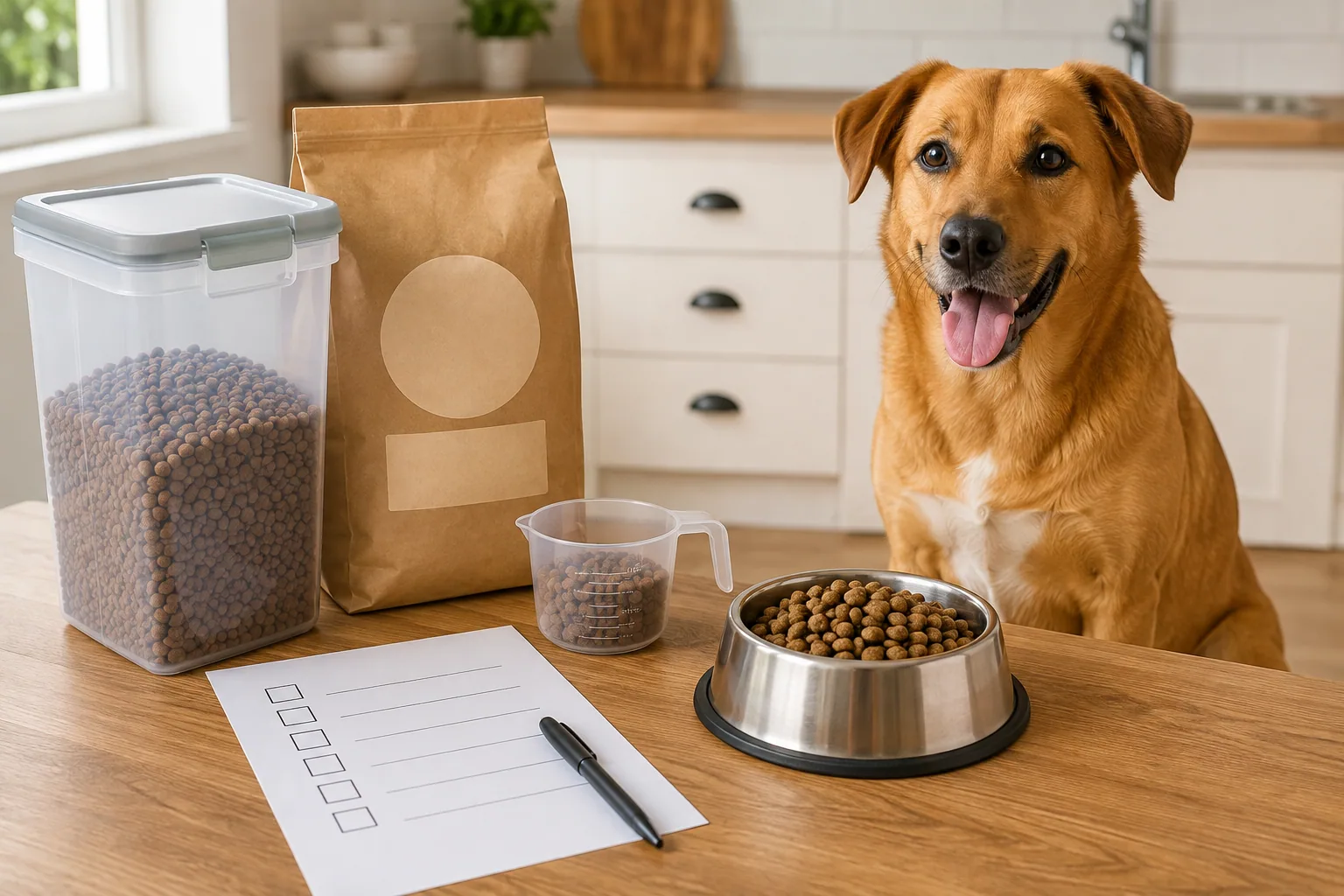
If you use a storage container, keeping the original bag inside it when possible provides a practical combination: the container holds the food, while the bag preserves the product information. Between bags, clean and dry the container before filling it again. This is especially important if you change products or simply begin a new bag.
Avoid treating the container as a permanent home for unidentified food. If the original packaging has been discarded, write down the product information before it is lost, including the lot number, UPC, manufacturer, product name and best-by date.
Handle wet food promptly
For unused canned or pouched food, promptly refrigerate it or discard it. The refrigerator should be kept at 40 F or below. Use the product label as the final guide for storage instructions, since general handling guidance does not replace directions for a particular food.
This step belongs in the feeding routine, not just in a monthly kitchen cleanout. After serving wet food, decide promptly whether the remaining unused portion will be refrigerated or discarded, and keep its packaging information available when possible.
Keep feeding tools clean
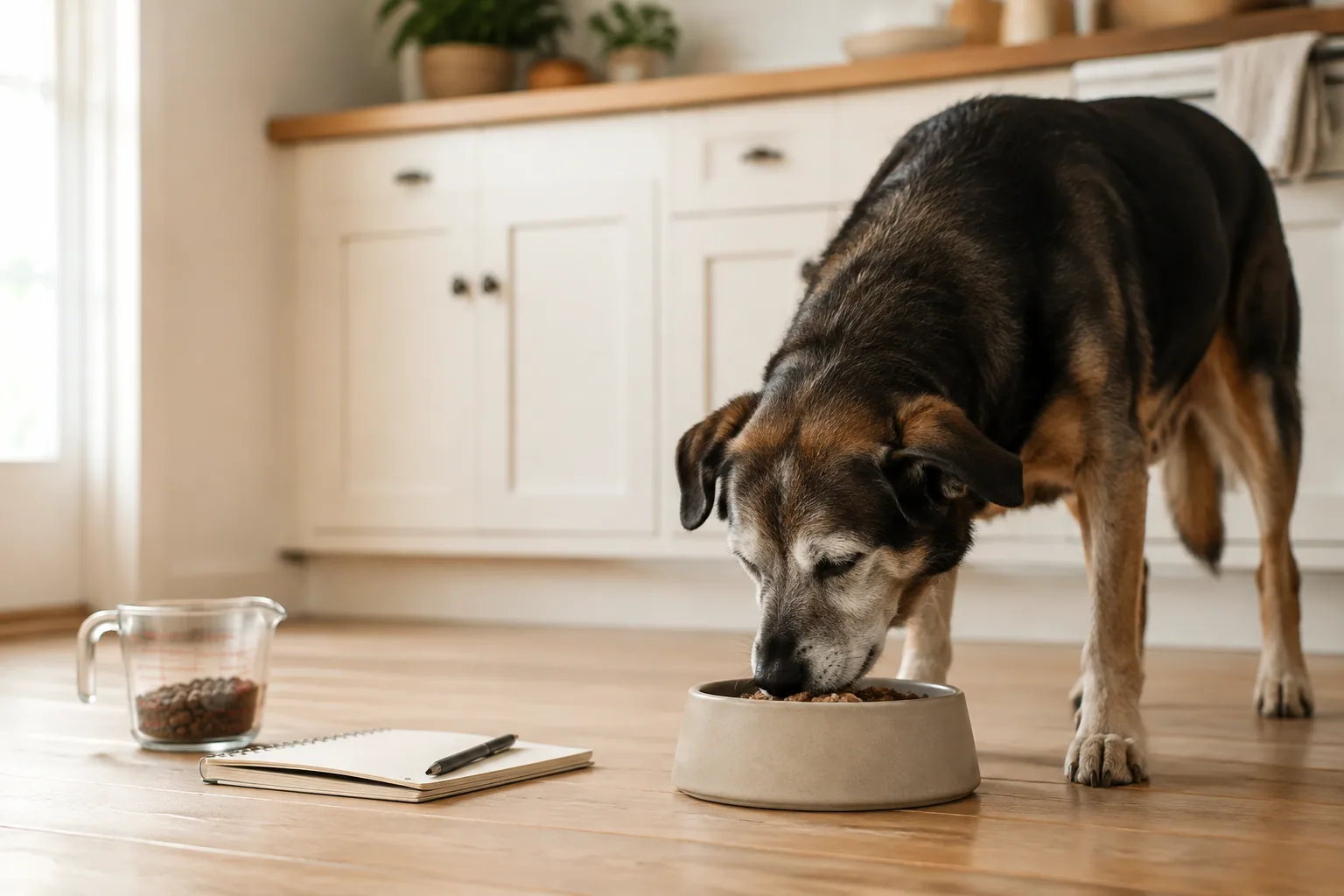
Wash your hands before and after handling pet food. Clean food bowls and dedicated scoops after use. These small tasks can be attached to an existing routine, such as washing the bowl when you finish preparing your own meal or cleaning the scoop when you close a dry-food bag.
A quick storage checklist
- Buy packages that are intact.
- Keep the original bag, including its product and date information.
- Fold dry-food bags closed between uses.
- Store dry food in a cool, dry place below 80 F.
- Keep food secure from pets.
- Clean and dry storage containers between bags.
- Promptly refrigerate or discard unused canned or pouched food.
- Keep the refrigerator at 40 F or below.
- Wash hands before and after handling food.
- Clean bowls and dedicated scoops after use.
There is no single container or shortcut that replaces label directions and careful handling. A consistent routine helps you preserve the information attached to the food while keeping storage, cleaning and feeding steps clear.
Further reading & sources
FDA: Proper Storage of Pet Food and Treats ↗FDA: Tips for Safe Handling of Pet Food and Treats ↗Every dog is different. This is general information, not a diagnosis or treatment plan. Ask your veterinarian about individual health, diet, and supplement decisions.