How to Tell Normal Dog Play From a Conflict
Look beyond noise and speed. Loose bodies, play bows, turn-taking and a choice to return point toward play, while stiffness, hard staring and attempts to leave mean the interaction needs space.
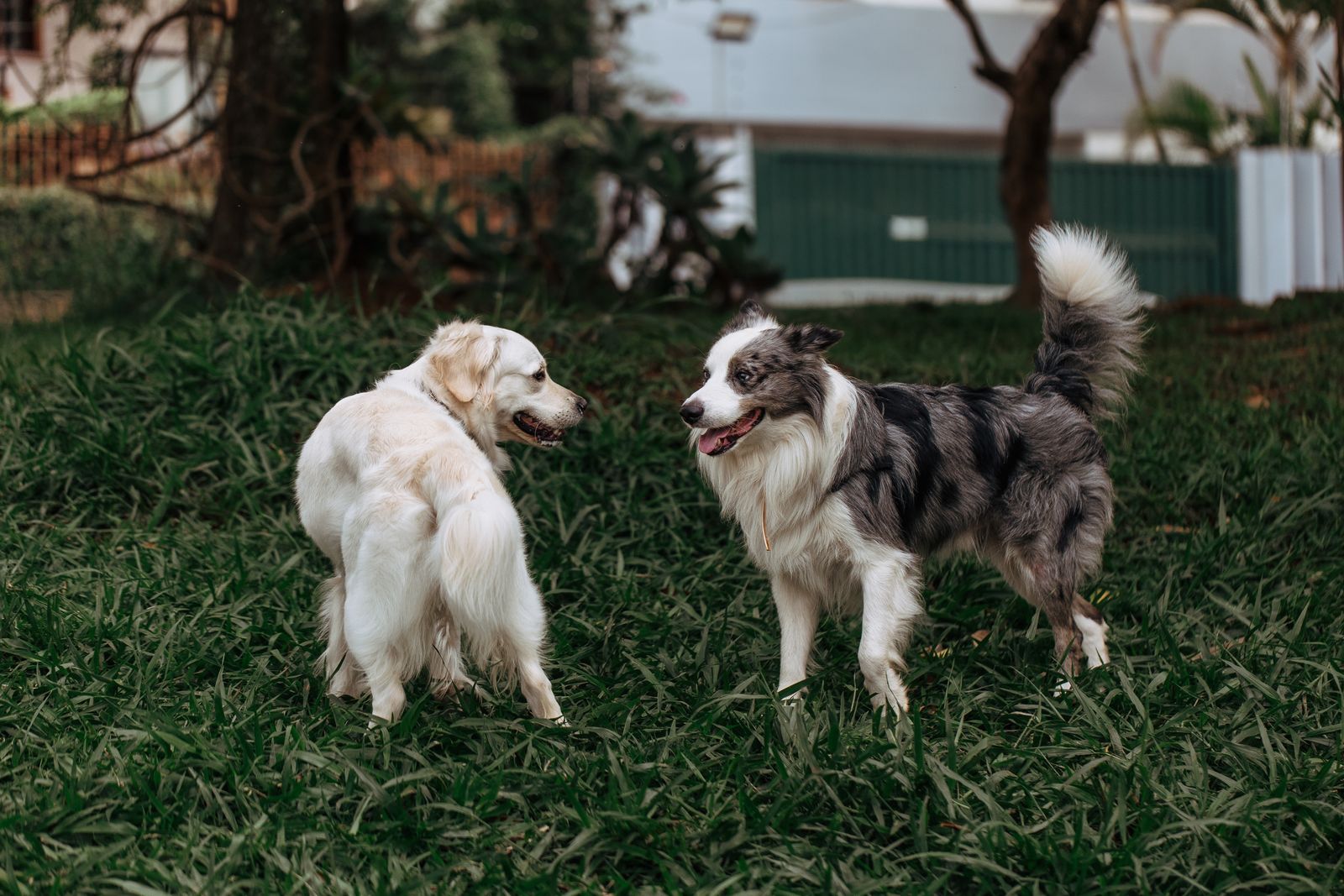
Photo by Helena Lopes under the Pexels License.
Dog play can look dramatic. Dogs may chase, mouth, wrestle and make plenty of noise, so a single moment rarely tells the whole story. The more useful question is whether both dogs look comfortable throughout the interaction and choose to keep participating.
Start with the whole body
Comfortable play tends to be loose and bouncy rather than rigid. Look for a relaxed posture, a soft open mouth and play bows, in which a dog lowers the front of the body while keeping the rear raised. These signals can invite play and help make the interaction less threatening.
Play also commonly includes turn-taking. One dog may chase, then become the one being chased. Dogs may take turns being on the ground or showing voluntary vulnerability. After a pause, a dog that is comfortable may return for more interaction.
No single signal should be treated as a verdict. Instead, watch the pattern across several moments: Do both dogs have opportunities to change roles? Do they pause? Do they return voluntarily? Does each dog appear loose and able to move normally?
Notice signs that the interaction is not comfortable
Conflict or growing discomfort is more concerning when a dog becomes stiff. A stiff forward posture, hard stare, exposed teeth or a closed mouth can mean the dog needs space. Pinned ears, a tucked tail, lip licking and head turning indicate worry. Attempts to leave are especially important because they show that a dog may not want to continue the interaction.
Low warning growls can also signal conflict, particularly when they occur alongside a rigid body or other signs of tension. Avoid judging the situation by sound alone. A noisy exchange can still include loose, playful movement, while a quiet interaction can contain a hard stare or stiff posture that calls for caution.
Pause before tension builds
If you see stiffness, a hard stare, repeated attempts to escape or other signs that a dog needs space, interrupt the interaction without reaching for collars. The American Kennel Club specifically cautions against grabbing collars during a fight. Putting your hands near dogs in conflict can place you in the path of their mouths.
Instead, focus on creating space between the dogs without putting your hands on their collars. Give the worried or tense dog room to move away, and do not pressure that dog to re-engage. Once the interaction has stopped, continue watching body language rather than assuming the dogs should immediately resume playing.
If both dogs remain loose, take turns and voluntarily return after pauses, the interaction is more consistent with play. If one dog repeatedly tries to leave while the other continues, or if tension keeps increasing, treat the situation as a need for separation and space rather than a game that needs more time.
Use caution when the picture is unclear
Body language is easiest to interpret as a sequence, not as one isolated gesture. A play bow does not cancel out later stiffness, and a wagging tail alone does not establish that a dog is comfortable. Consider posture, facial expression, movement, pauses and each dog's choice to continue together.
The supplied guidance explains signs of relaxed play, worry and conflict, but it does not set out a detailed threshold for when to contact a professional behavior specialist. If you cannot safely create space or cannot tell whether an interaction is escalating, avoid handling the dogs directly and seek qualified in-person guidance.
Further reading & sources
Are Dogs Playing or Fighting? - American Kennel Club ↗Understanding Your Dog's Behaviour - RSPCA ↗Every dog is different. This is general information, not a diagnosis or treatment plan. Ask your veterinarian about individual health, diet, and supplement decisions.