Why Does a Dog Keep Licking Its Paws? Start With the Pattern
Paw licking can have several possible causes. Learn what to inspect, what the timing and number of affected paws may suggest, and when redness, swelling, pain or limping calls for veterinary care.
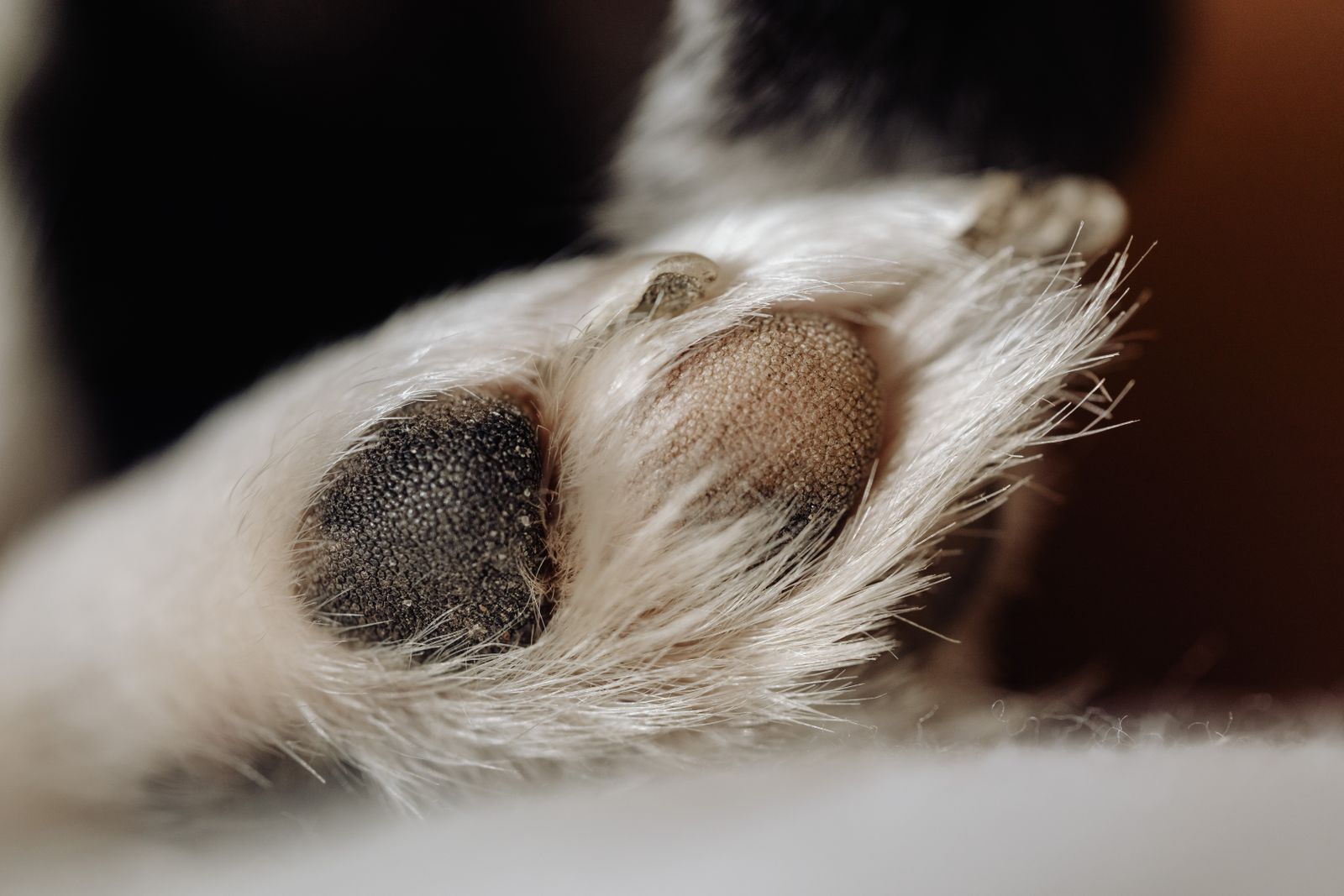
Photo by Kaboompics.com under the Pexels License.
A dog may lick a paw because something is irritating it, but the reason is not always obvious at first glance. Allergies are common possibilities, while infections, parasites, foreign bodies, immune disease and behavioral causes can also be involved. Because paw licking can damage the skin and encourage a secondary infection, the pattern is worth checking rather than dismissing as a harmless habit.
Begin with one question: how many paws?
The number of affected paws can provide a useful starting point for your inspection.
- One paw: Look closely for a cut, abrasion, insect bite or foreign object. A dog that suddenly focuses on one paw may be reacting to a localized problem.
- Several paws: Red or inflamed paws can be associated with contact irritation, allergies or parasites. This pattern does not identify the cause on its own, but it is important information to share with a veterinarian.
Do not treat the pattern as a diagnosis. The same visible behavior can have more than one possible explanation, and licking can make the original irritation harder to assess.
Notice when the licking happens
Timing can help you describe the problem clearly. Note whether the licking began suddenly or has built up over time. Watch for a change from occasional licking to repeated or excessive licking, and record whether the dog concentrates on one paw or several.
Also look at what happens alongside the licking. Redness, swelling, bleeding, pain and limping are important signs. A simple written note can include the affected paw or paws, when the licking is most noticeable, and any visible change in the skin. This gives your veterinarian a clearer account than a general description such as “my dog licks a lot.”
Inspect without guessing
Choose a calm moment and look at the paw your dog keeps licking. Check for the visible problems that can be associated with focused licking: cuts, abrasions, an insect bite or a foreign object. If more than one paw is red or inflamed, note that as well.
An inspection can help you spot an obvious issue, but it cannot rule out every cause. Allergies, infections, parasites, immune disease and behavioral causes may not be distinguishable from a quick look. Avoid assuming that every case is an allergy, especially when the licking is sudden, intense or limited to one paw.
When to arrange veterinary care
Veterinary assessment is warranted for sudden excessive licking. Arrange care promptly if you see redness, swelling, bleeding, pain or limping. Persistent licking also deserves attention, particularly if the skin is becoming damaged.
These signs matter because licking itself can worsen the skin and promote a secondary infection. A veterinarian can assess the paw and consider the different possible causes, including an injury or foreign body, irritation, allergies, parasites, infection, immune disease or a behavioral cause.
Until the paw has been assessed, keep observing rather than relying on the licking to reveal its cause. The most useful information is often simple: which paw is involved, whether the problem appeared suddenly, whether other paws are affected, and whether the paw looks red, swollen, painful or damaged.
Further reading & sources
Pododermatitis in Dogs - American Kennel Club ↗Why Does My Dog Lick My Feet? - American Kennel Club ↗Every dog is different. This is general information, not a diagnosis or treatment plan. Ask your veterinarian about individual health, diet, and supplement decisions.