A Front-Door Plan for Dogs Who Jump on Guests
Turn chaotic visitor arrivals into short, repeatable greeting practice built around calm distance, four paws on the floor and clear guest rules.

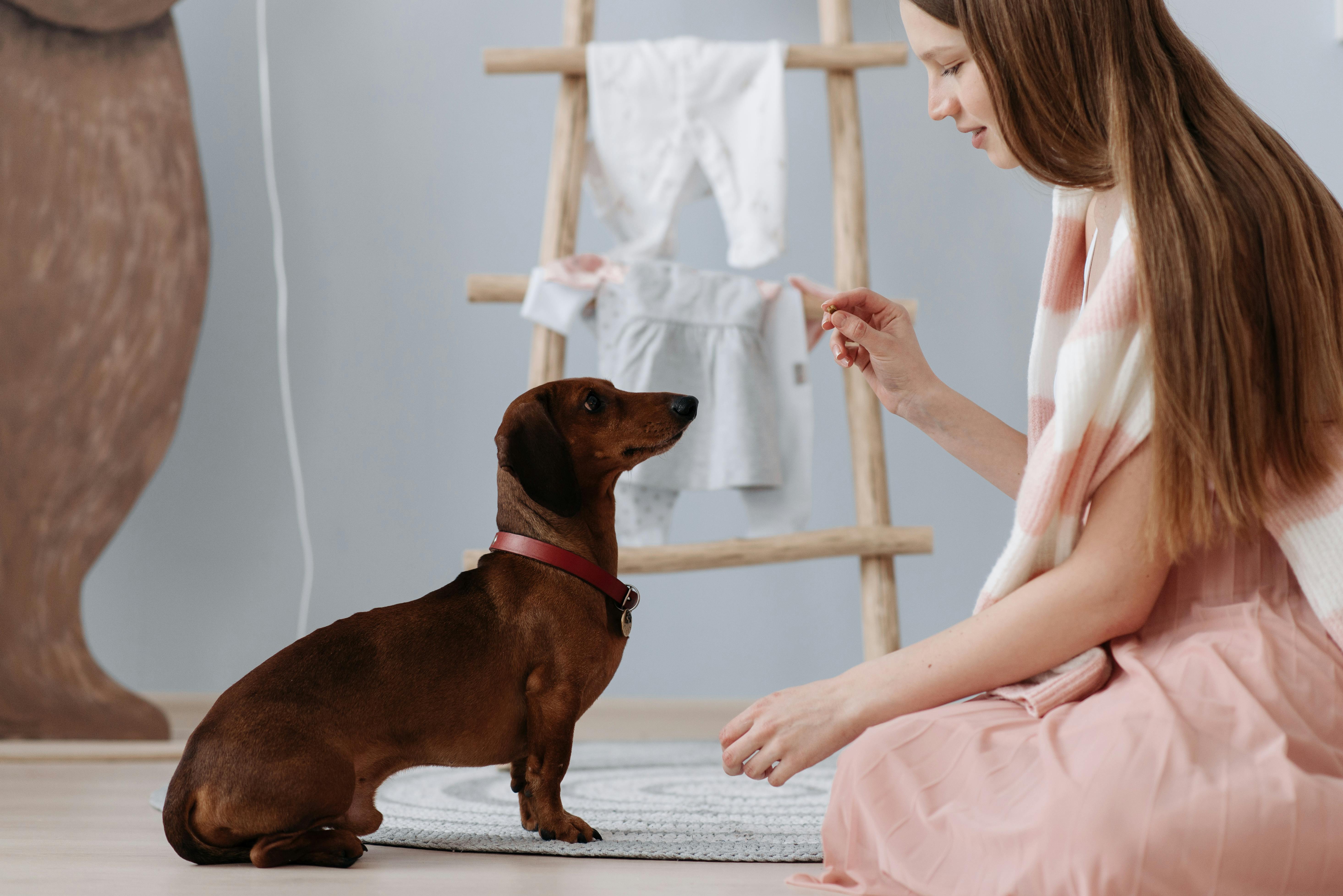
Photo by ROMAN ODINTSOV under the Pexels License.
A dog who launches toward every visitor is not trying to embarrass you. Jumping often keeps working because it starts a lively interaction: people talk, reach down, push the dog away or laugh. The practical goal is not to make arrivals joyless. It is to show your dog which greeting opens the door to attention.
Start with one calm helper, not a crowded gathering. Real guests can arrive behind a barrier while training catches up.
Separate arrival from greeting
Before the door opens, place your dog behind a sturdy gate or keep them on a comfortable lead at enough distance to think and eat. Ask the visitor to enter quietly and ignore the dog for the moment. This prevents another full-speed rehearsal while everyone gets settled.
Dogs Trust recommends avoiding situations that trigger jumping during training and guiding the dog into another activity before the jump happens. A small scatter of treats away from the doorway or a familiar toy can create that pause. Management is not failure. It gives you room to teach.
If your dog is barking, freezing, growling, retreating or unable to take food, treat that as a need for more space rather than a manners problem. Our guide to safer everyday greetings can help you notice when contact should wait.
Pick one greeting picture
“Four paws on the floor” is clearer than a vague request to be good. A sit can also work if it is comfortable and familiar, but it is not mandatory. Choose one picture that every person in the household can recognise and reward.
Practise without the door first. Walk toward your dog. If all four paws stay down, mark the moment with a word such as “yes,” place a reward on the floor, and offer brief attention. Step away and repeat. The Dogs Trust jumping guide advises staying calm, turning sideways and avoiding pushing or telling the dog off, because extra movement and attention can make the greeting more exciting.
For a refresher on markers and reward timing, use our reward-based training foundations.
Add the visitor in small pieces
Give your helper a simple script:
- Approach only while four paws are down.
- Drop a treat low or let you deliver it at floor level.
- Offer a short, calm greeting.
- Step away before the dog jumps.
If paws leave the floor, the visitor should calmly turn sideways or move out of reach. Do not shove, knee or scold. Wait for paws to return to the floor, mark that moment, and reset from an easier distance.
The RSPCA’s sit-training guidance recommends short, regular practice and adding the cue only when the dog is reliably moving into position. Apply the same principle here: first build the behavior, then attach a greeting cue such as “say hello.” Calling the cue repeatedly while the dog is airborne only makes it background noise.
Plan for real visitors
Training and hosting are different jobs. On a busy evening, your dog can remain behind a gate with a suitable activity instead of greeting everyone. If you do allow a greeting, tell the visitor the rule before the barrier opens. Children, anyone unsteady on their feet, and visitors who do not want contact should not become practice partners.
Keep a tiny record after each rehearsal:
- How far the visitor was from the dog
- Whether four paws stayed down
- What reward held attention
- Whether excitement rose after touch or conversation
Use the easiest successful version next time. If the jumping could knock someone over, your dog shows fear or aggressive behavior, or the setup feels unsafe, keep people separated and ask a qualified reward-based professional for individual help.
Further reading & sources
How to Stop Your Dog Jumping Up at People - Dogs Trust ↗How to prepare your dog for visitors - Dogs Trust ↗Teach your dog to sit - RSPCA ↗Every dog is different. This is general information, not a diagnosis or treatment plan. Ask your veterinarian about individual health, diet, and supplement decisions.