Teach Your Dog a Hand Target for Small Indoor Moves
Teach a voluntary nose touch to an open palm, then use it to invite a small change of position indoors, with easy steps and room to pause.
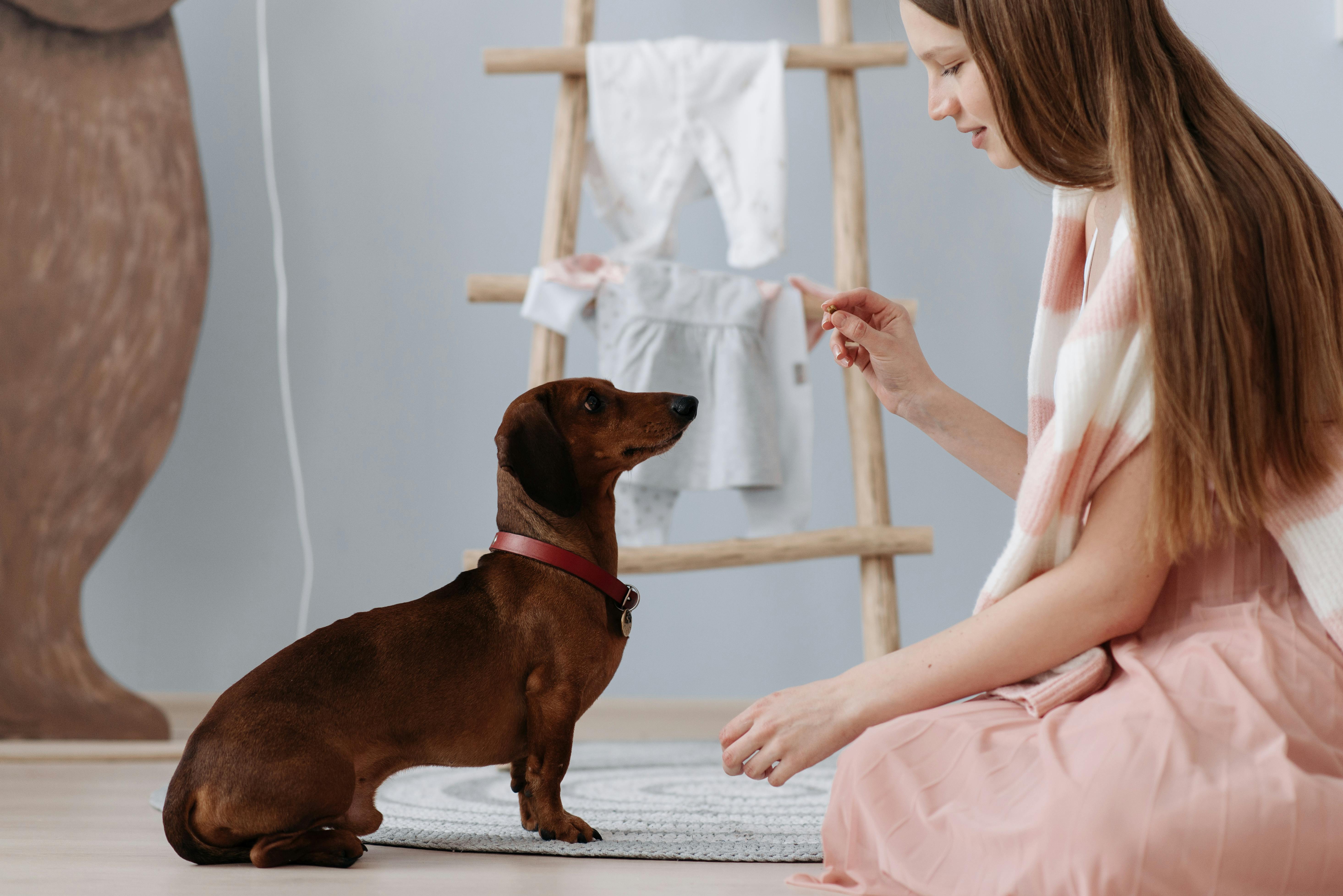
Photo by Pavel Danilyuk under the Pexels License.
An open palm can become a small invitation: come here, touch, collect a reward. Once your dog understands it, a hand target gives you a way to ask for a little movement indoors without lifting them or steering their body. Dogs Trust describes targeting as a way to guide a dog without handling them.
Keep the first project modest. Choose one comfortable patch of floor and teach a brief nose tap. You can save the hallway manoeuvres for later.
Let your dog investigate
Start in a quiet, familiar room with rewards ready. Offer a relaxed, empty palm near your dog's nose and keep it still. When their nose meets your hand, say your marker word, such as "yes", then deliver a reward. The American Kennel Club's nose-targeting guide recommends beginning just an inch or two away and rewarding near the target.
Repeat a few easy touches. Once your dog is reliably making contact, say "touch" just before presenting your palm. Mark the contact and reward again. Keep the word attached to an achievable action rather than repeating it while your dog looks elsewhere.
If marker timing feels unfamiliar, our reward-based training foundations explain the wider approach.
Make room for a smaller first step
Some dogs will investigate immediately; others need more space. Battersea's nose-touch instructions advise stopping if your dog moves away, then trying later with your hand farther away.
You can begin by marking interest in the offered hand before asking for actual contact. As that becomes comfortable, reserve the reward for a nose touch. If interest fades or frustration appears, return to the easier version. Reaching after your dog with the target would change the exercise: let them make the approach.
Ask for one small reposition
Once close touches are familiar, shift the offered palm a little to one side. Keep it within easy reach. Mark and reward when your dog moves over to touch it. Try a slightly different hand position before asking for a larger movement.
For example, practise beside an empty chair, with enough room for your dog to step toward your hand. Leave the chair still and the route clear. The exercise is simply a voluntary change of position.
Dogs Trust's target-training guidance recommends short sessions and progressing at the dog's pace. Mouthing, pawing or barking during the exercise can mean confusion or frustration; simplify or take a break.
A note for the next attempt
Use a scrap of paper to make tomorrow's starting point obvious:
- Where did you practise?
- Which hand did you offer?
- Was your palm beside the nose or a little farther away?
- Did your dog approach, hesitate or leave?
- What single detail will you keep the same next time?
Keep this note with your rewards so you do not have to remember the setup. If another household member practises too, share the same starting point and cue instead of inventing a harder challenge.
Write an observation rather than a grade: "Touched beside the chair; hesitated when I moved my hand farther away." That gives you a concrete place to restart. There is no need to turn each session into a test of how far your dog will travel.
Further reading & sources
Train your dog to touch a target - Dogs Trust ↗How to Teach Your Dog to Nose Target or Touch - American Kennel Club ↗Teach your dog a nose touch - Battersea ↗Every dog is different. This is general information, not a diagnosis or treatment plan. Ask your veterinarian about individual health, diet, and supplement decisions.


