Planning Safer Cold-Weather Dog Walks and Choosing a Coat That Fits
Before the first freeze, adjust walk length to your dog's needs, check that a coat allows free movement, and make paw care part of every return-home routine.
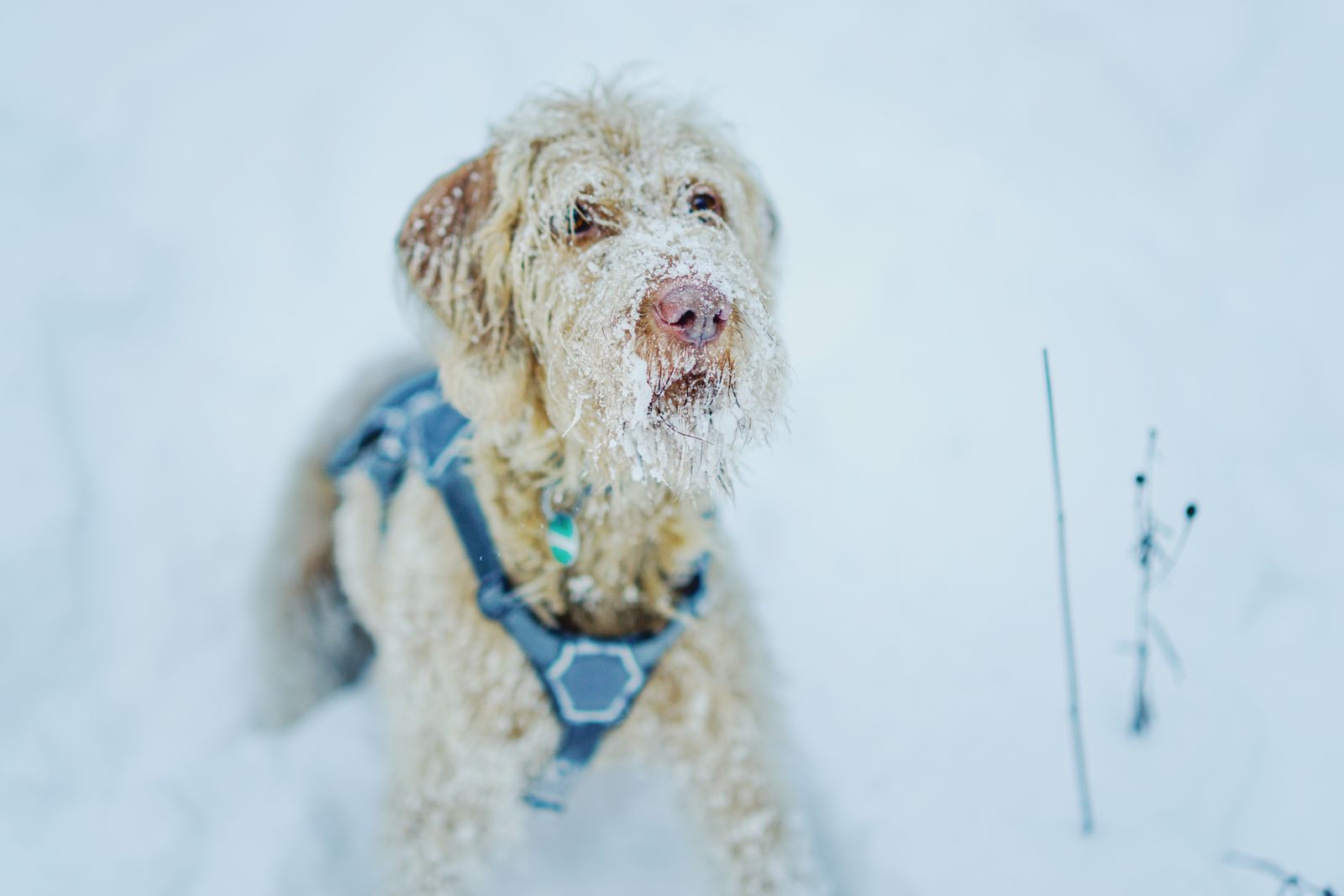
Photo by Andreas Schnabl under the Pexels License.
Start with your dog's cold-weather profile
A winter walk should be planned around the individual dog, not just the calendar. Small dogs, senior dogs, and dogs with short coats are especially sensitive to cold, so they may need more careful monitoring and shorter outings than other dogs. If your dog fits one of these groups, prepare to turn back sooner and pay close attention to changes in behavior or movement.
A dog that seems comfortable at the beginning of a walk can still become cold as the outing continues. Keep the first cold-weather walks deliberately short enough to observe how your dog responds. You can make decisions based on visible signs rather than treating a particular temperature or walk length as suitable for every dog.
Decide when to end the walk
Shivering or weakness are signs to take seriously. If either appears, end the outing and move your dog away from the cold. These signs are useful prompts to avoid extending a walk simply because your planned route is not complete.
Pay attention throughout the walk, especially when your dog is small, senior, or short-coated. A shorter walk is a practical safeguard in cold weather, and it may be the better choice when your dog shows that conditions are becoming uncomfortable.
Check coat fit before you leave
For a dog that needs extra protection, a coat should cover the chest and back while still allowing normal movement. Fit is not only about coverage. A coat that restricts movement can make walking less comfortable, so watch your dog move in it before heading outside.
Have your dog walk indoors while wearing the coat. Check whether the chest and back are covered, then observe whether your dog can move freely. If movement is limited, the coat does not meet the basic fit guidance and should not be used for the outing. A coat can be particularly worth considering for a short-haired dog, while small and senior dogs also deserve close attention because they are among those identified as especially cold-sensitive.
Make paw cleanup part of the route home
Salt, ice, and deicing chemicals can collect on a dog's feet during a walk. After returning home, wash and dry the feet to remove ice and deicing chemicals. This simple step should be part of the routine whenever sidewalks or other walking areas may have been treated.
Do not stop at a quick glance. Check the feet as you clean them, then dry them so residue and moisture are not left behind. If your dog walks on salted sidewalks, plan a few extra moments for this care before settling in at home.
Also keep your dog away from antifreeze spills. This is a separate cold-weather hazard, but it belongs in the same preparation plan because winter outings may bring dogs near treated or contaminated surfaces.
A before-and-after checklist
Before leaving, consider your dog's size, age, and coat type. If your dog is small, senior, or short-coated, plan a shorter walk and have a properly fitting coat available when appropriate. Once outside, watch for shivering or weakness instead of pushing through the planned route.
When you return, wash and dry your dog's feet, removing ice and deicing chemicals. These steps do not make every cold-weather outing suitable for every dog, and the supplied guidance does not provide a universal temperature, walk duration, or coat requirement. Use your dog's response to guide the decision, and end the walk when warning signs appear.
Further reading & sources
Cold Weather Pet Safety Tips for Dogs and Cats - AAHA ↗Cold Weather Safety Tips - ASPCA ↗Every dog is different. This is general information, not a diagnosis or treatment plan. Ask your veterinarian about individual health, diet, and supplement decisions.