Teach Your Dog to Pause at an Open Door
Build calm doorway habits in small steps, with a physical safety backup, gradual door movement and a clear release for everyday exits.
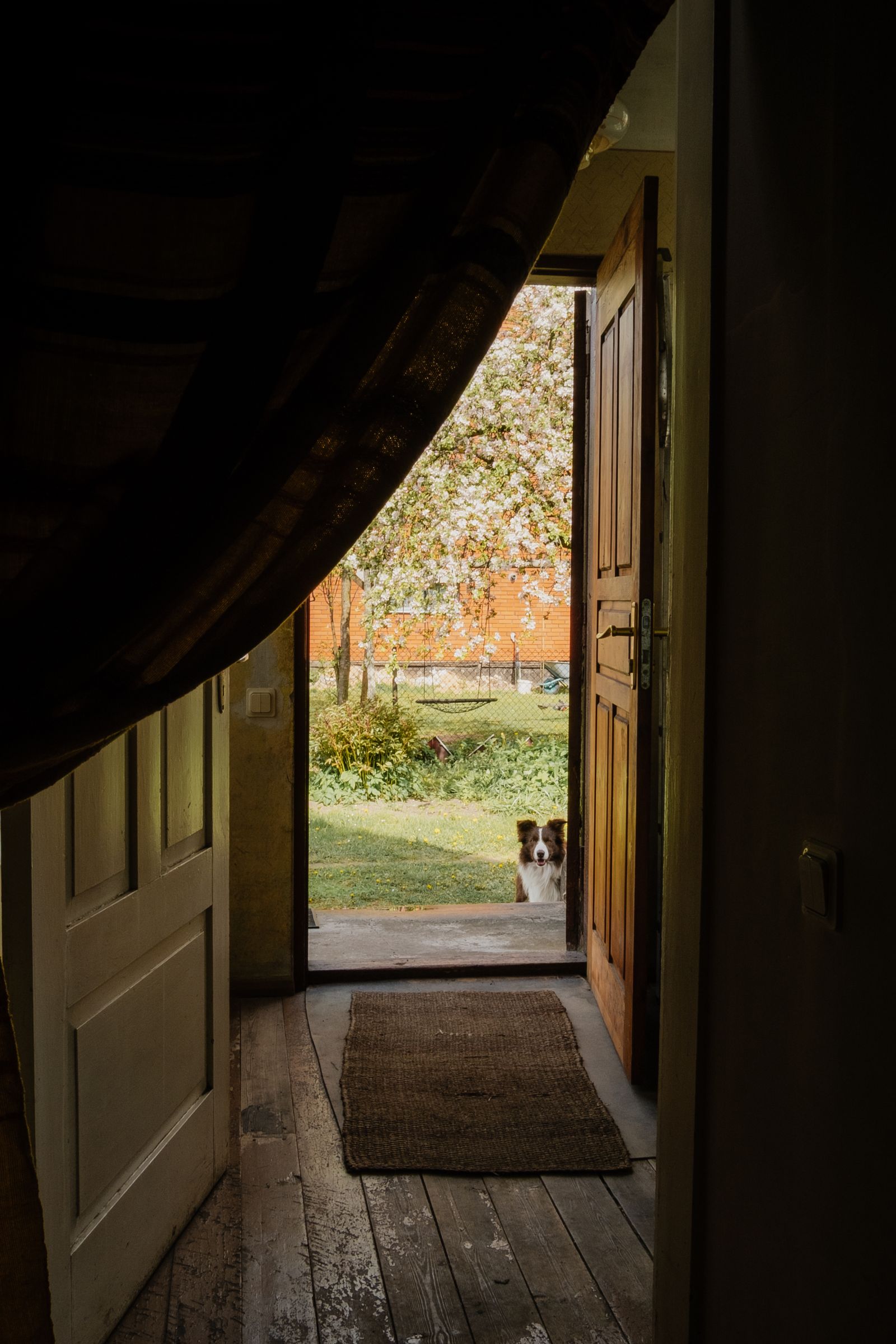
Photo by Elina Volkova under the Pexels License.
An open doorway can turn an ordinary walk or delivery into a safety problem when a dog rushes through the gap. The answer is not to keep testing whether your dog can resist. Use a physical backup while you teach a small, repeatable pause.
This lesson is about everyday exits, not guest greetings. If visitors are the main trigger, use our front-door greeting plan instead.
Put safety ahead of practice
Until the skill is reliable, clip on the lead before opening an exterior door. A sturdy gate, exercise pen or closed interior door can add a second barrier for deliveries and busy arrivals. The American Kennel Club recommends leashes and barriers while door-darting training is still in progress. Management prevents an unsafe rehearsal; it does not replace training.
Choose quiet practice times when nobody needs to leave. Keep the real street, hallway or unfenced yard out of the exercise. Do not test progress by dropping the lead or leaving the door open.
Begin with a boring doorway
The front door may already predict a walk, smells and freedom. Dogs Trust suggests starting at a less exciting inside door if calm waiting is too difficult. Stand with your dog on the safe side and reach toward the handle. If your dog remains behind the threshold, mark that moment with a word such as "yes" and give a small reward.
If your dog surges forward, stop the movement and reset. There is no need to scold, push them back or repeat a cue. Make the next repetition easier: move your hand only partway, touch the handle without turning it, or increase your distance from the door.
This is a useful place to practise a hand target if you need a calm way to guide your dog back into position.
Let the opening grow by inches
Once the handle is unremarkable, turn it, reward calmness and release it. Next, open the door a crack, close it and reward. Dogs Trust advises opening only a small amount at first and closing the door gently if the dog pulls ahead. Progress from a crack to a wider opening only when the current step looks easy.
A sit is optional. The useful behavior is staying on the safe side of the threshold while the door moves. That makes the lesson practical for dogs who find sitting uncomfortable or who naturally prefer to stand.
Keep sessions short. Five careful repetitions are more useful than one long attempt that ends in frustration. Stop before your dog is too excited to notice you or take a reward.
Add a clear release
When your dog can remain inside while the door opens, pause for one second and then say a release phrase such as "let's go." Walk through together on lead and reward attention outside. Gradually vary the pause rather than making every repetition longer.
The release matters because it separates two pictures: an open door means wait on this side, while the release means move through with you. Practise at other safe doors so the skill is not tied to one handle.
For walk exits, pair the doorway pause with the first few steps from our loose-leash troubleshooting guide. A calm threshold followed by immediate pulling is simply a sign that the outdoor part needs its own easier practice.
Track the step that succeeds
After each session, note the widest opening your dog managed calmly, whether the lead stayed loose and what made the setup harder. Keys, shoes, a delivery sound or another person moving nearby can change the difficulty.
Move back a step whenever your dog repeatedly crosses the threshold before release. If bolting has already led to escapes, or you cannot create a securely managed practice area, keep the barriers in place and ask a qualified reward-based trainer for help. The goal is not a dramatic test. It is a doorway routine that stays safe on ordinary days.
Further reading & sources
How to train your dog to be patient in doorways - Dogs Trust ↗How to Teach Your Dog Not to Door Dart - American Kennel Club ↗Every dog is different. This is general information, not a diagnosis or treatment plan. Ask your veterinarian about individual health, diet, and supplement decisions.