Teach Your Dog to Drop a Toy Without a Chase
Turn toy release into a predictable trade, then add the cue and return to play so dropping an item does not end the fun.
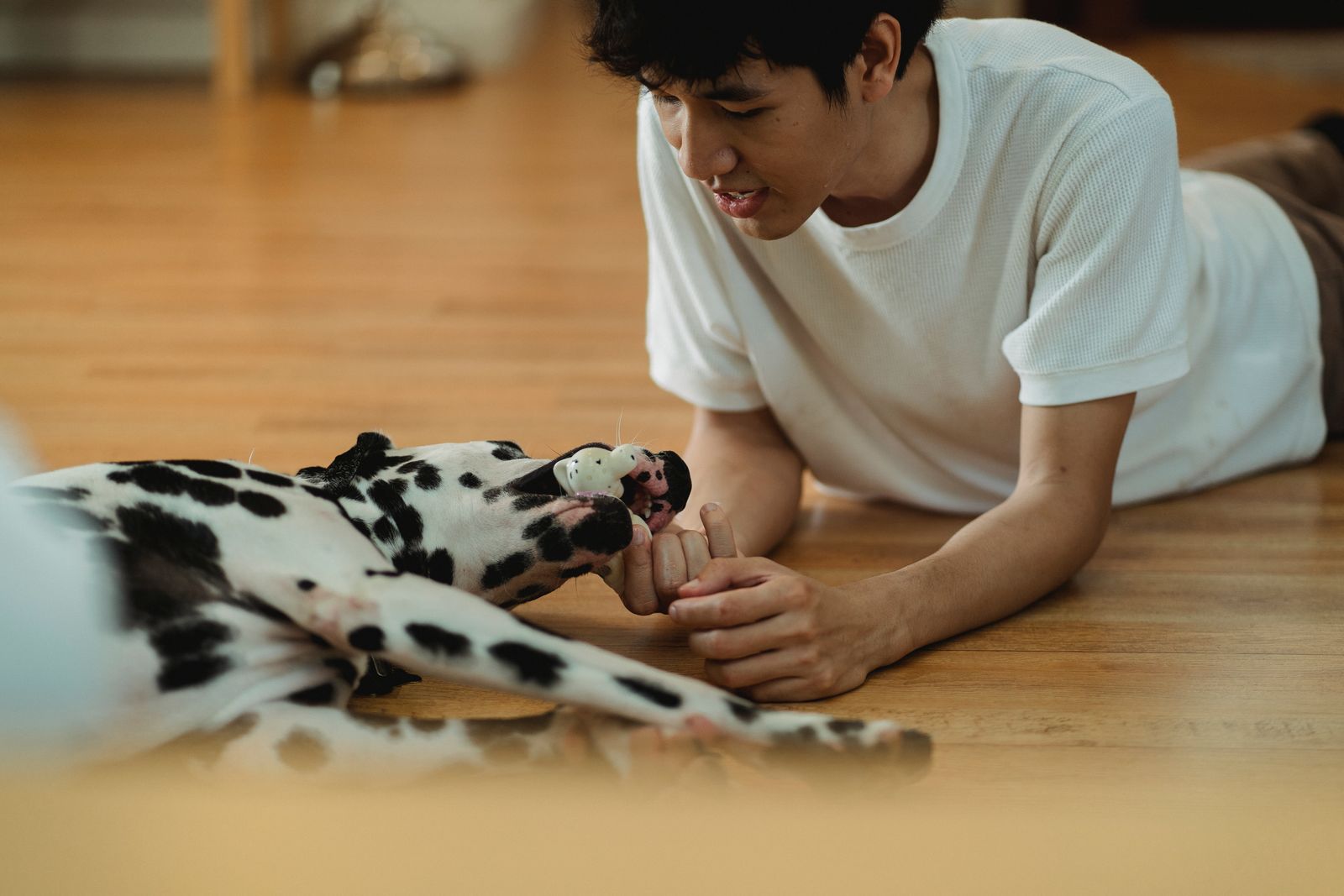
Photo by Bethany Ferr under the Pexels License.
A dog who runs away with a toy may be enjoying the chase, protecting a prized object or simply repeating a game that has worked before. Reaching into their mouth or following them around the room can make the object more exciting. A calmer plan is to teach that releasing something reliably leads to a fair exchange - and often to more play.
"Drop" means release what is already in the mouth. "Leave it" means do not pick up or approach an item. Keeping those jobs separate makes each cue easier to understand.
Set up an easy first trade
Start in a quiet room with a safe toy your dog likes but does not treasure. Keep a handful of small, high-value food rewards nearby. Avoid beginning with a stolen sock, a favorite chew or anything dangerous.
Offer the toy and let your dog hold it. Then place or toss one reward just beside their nose. The moment the mouth opens and the toy falls, mark the release with a calm word such as "yes." Let your dog eat the reward, then offer the toy again.
Returning the toy is important. Dogs Trust recommends giving the item back during early practice so releasing it does not always predict losing it. The American Kennel Club also describes a toy-for-toy trade as an option for dogs who value play more than food.
If your dog ignores the reward, the trade is not fair enough yet. Use a less exciting toy, choose a quieter room or try a reward your dog already enjoys. Do not pry the mouth open.
Add the cue after the release is predictable
For several repetitions, say nothing before presenting the reward. When your dog is opening their mouth promptly, say "drop" once just before the usual trade. Mark, reward and return the toy.
Gradually move the cue a little earlier. The goal is for the word to predict the familiar action, not to become background noise while you repeat it. Keep sessions brief and stop while both of you still want another turn.
Tug can become its own reward. Freeze the toy, wait for the release, mark it, then restart the game. If your dog needs help settling between turns, a familiar hand target can guide them back without grabbing their collar.
Prevent the chase version of the game
Practise in a small, uncluttered space so running laps is less rewarding. If your dog moves away, stay still rather than pursuing them. You can trade with a second toy, or scatter a few rewards away from the object and calmly pick it up while your dog eats.
Management matters outside training. Put laundry, children's toys and unsafe chews out of reach. For dogs who repeatedly grab household objects, pair this lesson with the setup changes in our destructive chewing guide. A well-timed trade teaches more than waiting for the next emergency.
Build toward useful objects carefully
Once your dog releases several ordinary toys on cue, practise with safe objects of slightly higher value. Change only one detail at a time: the room, the toy or the distance from the reward. Continue to pay well and sometimes return the item.
This exercise is not a test for resource guarding. If your dog becomes still, moves away with the object, growls, snaps or guards access, stop approaching and keep people and other animals away. Ask a qualified reward-based professional for an individual plan. A sudden change in behavior also deserves a veterinary conversation.
For an unsafe object, avoid turning the moment into a wrestling match. Create distance, offer a generous food scatter or another safe trade if possible, and contact a veterinarian promptly when swallowing or toxicity may be involved.
Track one simple result after each session: which object your dog released, what trade worked and whether you had to show the reward. Over time, the useful change is not a dramatic command. It is a dog who expects cooperation instead of a chase.
Further reading & sources
How to train your dog to leave it - Dogs Trust ↗How to Teach Your Dog to Drop It - American Kennel Club ↗Every dog is different. This is general information, not a diagnosis or treatment plan. Ask your veterinarian about individual health, diet, and supplement decisions.